Casa de Sande
Cartelle · Ourense · Galicia
Casa de Sande
Lords of the Tower of Sande, Castellans of Cartelle, Guardians of the Arnoia Valley
“If I were to dismiss all my men, only you would I keep.”— Emperor Charles V, to Álvaro de Sande (attributed)
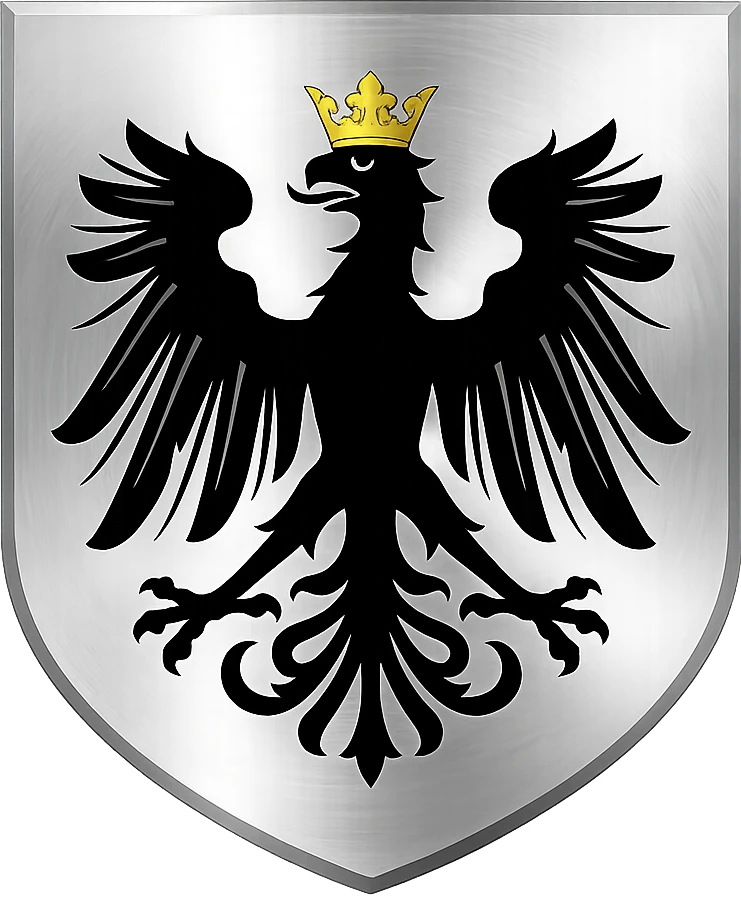
Arms of Sande
On a field of silver (argent), a black eagle displayed (sable) crowned in gold (or). The eagle represents generosity, magnanimity, and nobility of spirit.
From the Counts of Galicia to the Lords of Sande
According to Padre José Santiago Crespo del Pozo's Blasones y linajes de Galicia, the Sande are an ancient and illustrious Galician lineage traditionally claiming descent through the male line from the royal family of Count Hermenegildo Gutiérrez (c. 850 — after 912), Mayordomo Mayor of King Alfonso III of Asturias. Hermenegildo was a magnate of immense power: repopulator and Count of Coimbra, his daughter Elvira became Queen Consort of León as wife of King Ordoño II. Their son Sancho Ordóñez became the first King of Galicia (926–929); like most medieval monarchs his court was itinerant, but the Miño valley remained closely tied to his royal household — he was buried at the monastery of Castrelo de Miño, and his widow Goto Muñiz stayed on as its abbess. Over a century later, Garcia II — a direct descendant of Ordoño II and Elvira through the Leonese royal line — chose nearby Ribadavia as the capital of his Kingdom of Galicia (1065–1071).
From this exalted line descended Don Juan de Sande, who established himself as lord of the valley and castle of Sande in the parish of San Salvador de Sande, municipality of Cartelle, in the Terra de Celanova. The Sande family name is toponymic, derived from the Latin sabulum (coarse sand), marking the sandy alluvial soils where the Arnoia and Miño rivers converge below the fortress. The earliest documented reference to the Sande surname in Galicia dates to 1274.
- Their son Sancho Ordóñez became the first King of Galicia (926–929); buried at Castrelo de Miño, his widow Goto Muñiz became abbess of its monastery
- The family established their seat at the Castle of Sande in Cartelle, Ourense
- The surname derives from the Latin sabulum (coarse sand), a toponymic reference to the sandy river soils
- The earliest documented bearer of the Sande surname is Fernán Peláiz de Sande, who appears as a witness in a Galician charter of 1274 (Corpus Xelmírez)
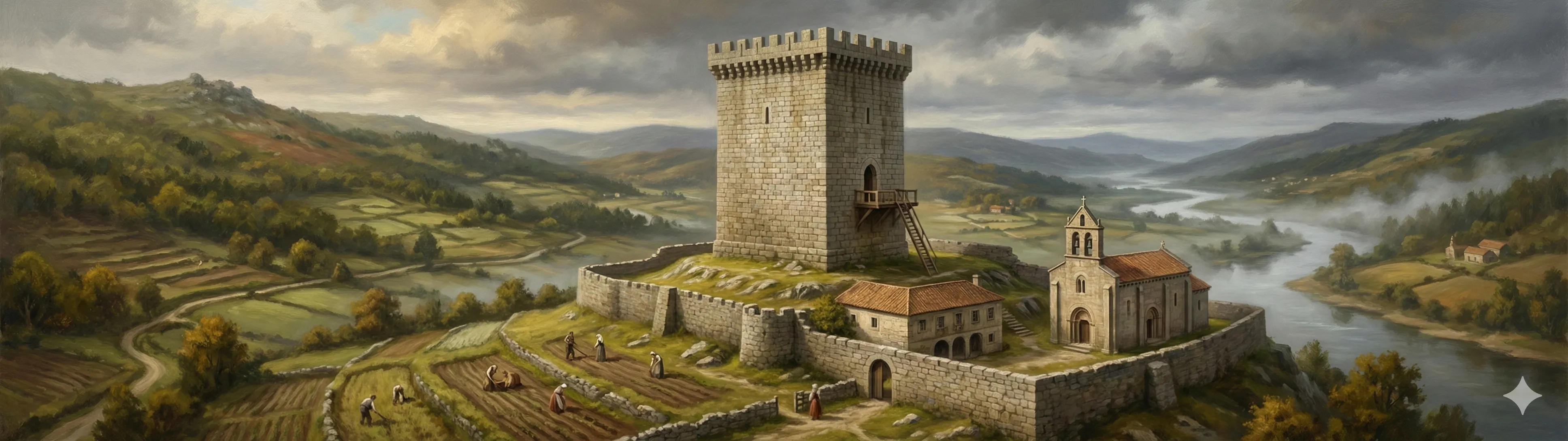
The Tower of Sande: Granite Sentinel of the Arnoia
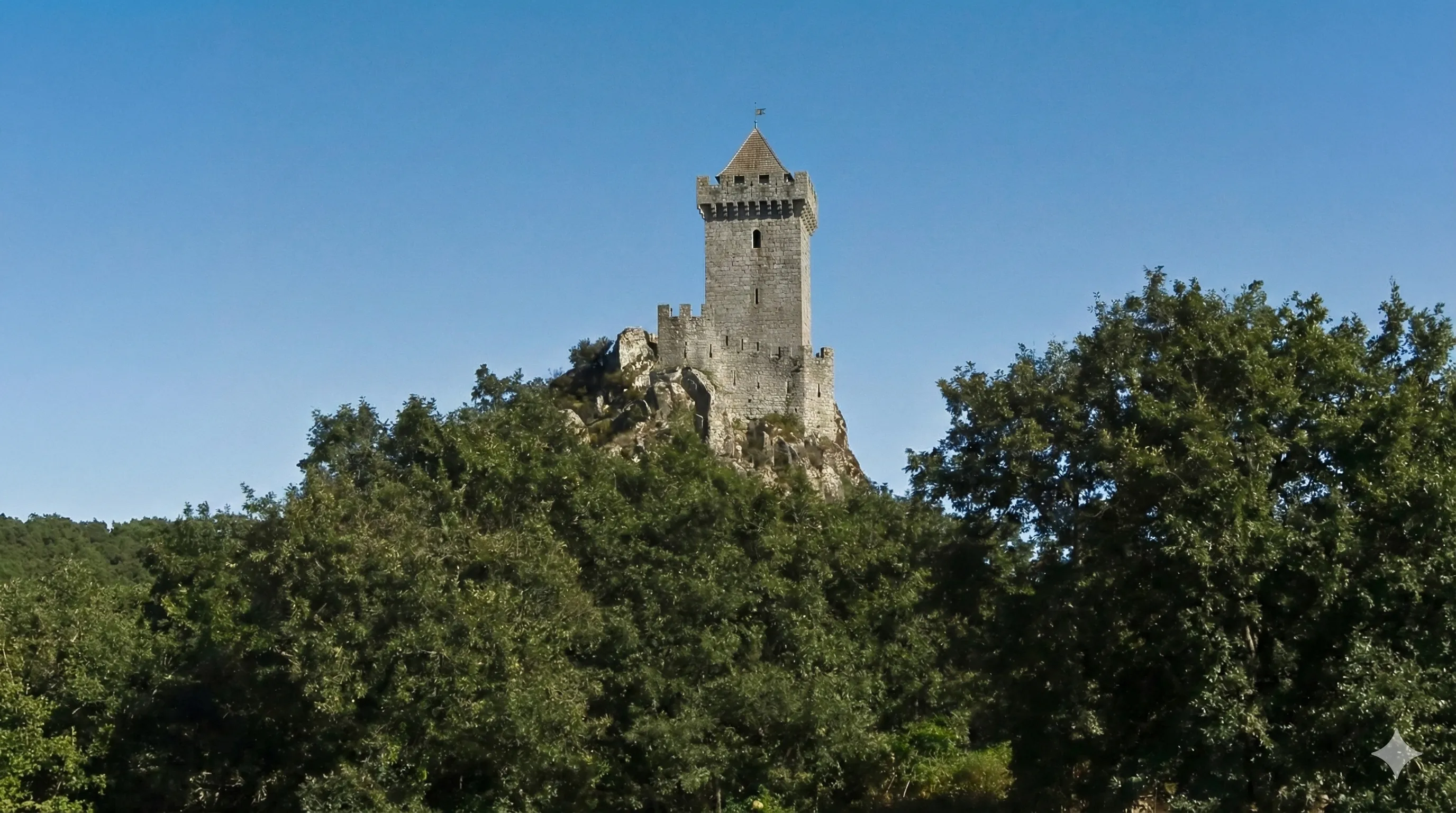
The Torre de Sande stands on a solitary granite outcrop at 506 metres altitude in the parish of San Salvador de Sande, Cartelle. Positioned between the rivers Arnoia and Miño, the tower commands panoramic views across a vast agricultural valley of approximately 12 kilometres per side. Built in late Gothic style from quality granite ashlar blocks, the rectangular keep measures 6.4 by 5.8 metres and rises approximately 13 metres. A single semicircular arched entrance on the east face, elevated 3.5 metres above ground, preserves two corbels that once supported a wooden landing platform. Above the entrance, the carved coat of arms of the Sande lineage endures in stone.
The tower was the nucleus of a broader architectural complex that included the Pazo de Sande and the Romanesque church of San Salvador de Sande, which houses a magnificent Baroque retablo by Francisco de Castro Canseco (c. 1700-1710), one of the great sculptors of Galician Baroque. The parish also contains pre-Roman castro remains, creating a layered archaeological landscape spanning from the Iron Age through the medieval period.
- Rectangular granite keep: 6.4 × 5.8 metres, approximately 13 metres in height
- Elevated entrance at 3.5 metres with corbels for a wooden landing platform
- Sande coat of arms carved above the entrance arch
- Stone mason marks (lapidary marks) visible on the ashlar blocks
- Part of a complex including the Pazo de Sande and Igrexa de San Salvador de Sande
- The church retablo by Castro Canseco (c. 1700-1710) is a masterwork of Galician Baroque
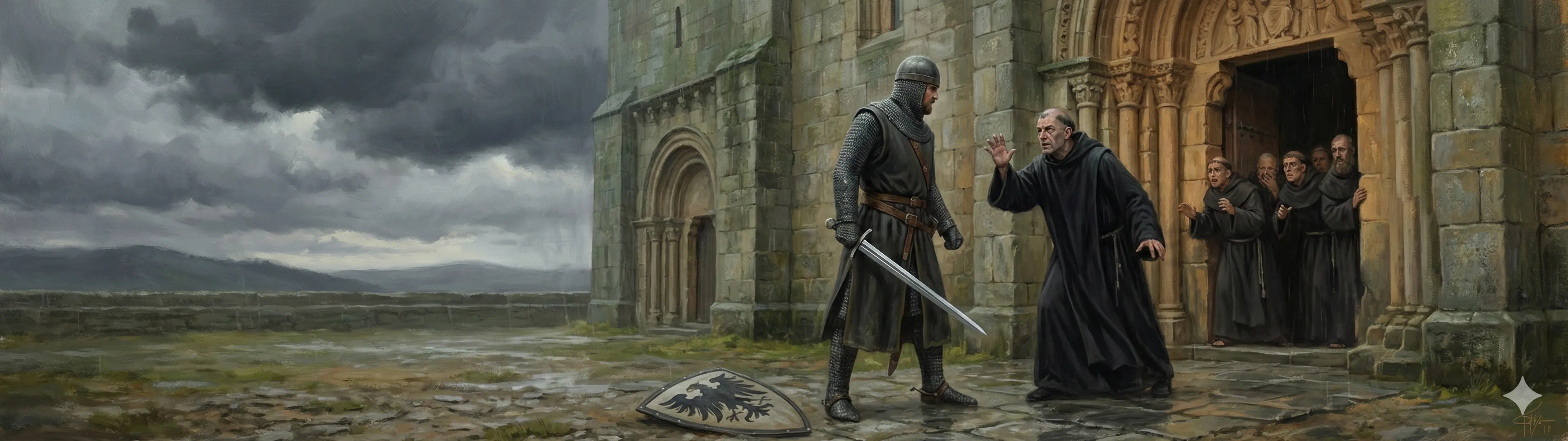
The Murder of the Abbot and the Royal Confiscation
The defining event in the early history of the Casa de Sande was an act of violence whose roots lay in the entangled history of a noble family and a monastic institution. The lords of Sande and the founder of the Monastery of San Salvador de Celanova shared a common ancestor: Count Hermenegildo Gutiérrez (c. 850–912), the mayordomo mayor of King Alfonso III and conqueror of Coimbra. His son, Count Gutierre Menéndez, was the most powerful magnate in 10th-century Galicia, and his grandson San Rosendo — bishop, viceroy, and celibate Benedictine monk — founded the Monastery of Celanova in 936 on lands donated by his own brother, Count Froila Gutiérrez. From this same stock, according to Padre Crespo's Linajes y Blasones de Galicia, descended the lords of Sande, who held the Torre de Sande as their ancestral seat overlooking the valleys of the Arnoia and Miño rivers. But San Rosendo left no heirs: within a generation, Celanova became an autonomous Benedictine institution governed by elected abbots with no blood ties to the family that had endowed it. Over the centuries, these abbots accumulated vast territorial holdings, priories across Ourense and beyond, and titles including Count of Bande, Marquis of the Torre de Sande, and Chaplain of the Royal House. Prolonged territorial clashes erupted between the monastery and the secular Sande lords, culminating in an act of extraordinary gravity: Nuño de Sande, Señor del Castillo y Valle de Sande, killed the abbot of Celanova during one of these confrontations. In medieval Galicia, where monasteries held immense spiritual and temporal authority, the murder of such a churchman demanded the harshest royal response.
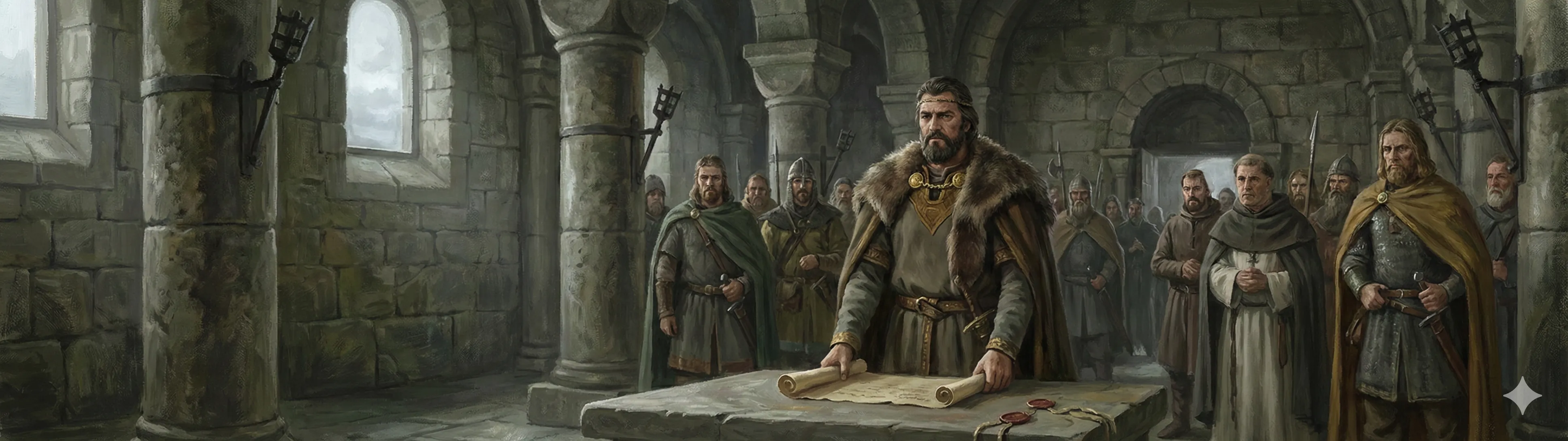
The killing precipitated — or provided the justification for — a definitive royal confiscation. King Alfonso VII of León and Castile, together with Queen Berenguela of Barcelona, issued a charter on 5 May 1141 in Zamora, donating the Castle of Sande — with all its hereditary lands, jurisdictional rights, and revenues — to the Monastery of San Salvador de Celanova. The confiscation was definitive: the Sande family lost their ancestral fortress to the very institution their ancestor's relative had founded two centuries earlier. The abbots of Celanova thereafter held the title of Marquises of the Tower of Sande — the family name now adorning a monastic dignity. This donation was later confirmed by Alfonso IX of León, and the original Latin parchment (378 × 430 mm, in Caroline script showing Gothic influences) survives in the Archivo Histórico Nacional.
- The lords of Sande and the founder of Celanova shared a common ancestor: Hermenegildo Gutiérrez → Gutierre Menéndez → San Rosendo / the lords of Sande
- San Rosendo, a celibate Benedictine monk, founded Celanova in 936 — within a generation it became an autonomous institution with no blood ties to the Sande
- The abbots of Celanova held titles including Count of Bande, Marquis of Torre de Sande, and Chaplain of the Royal House
- Nuño de Sande killed the abbot of San Salvador de Celanova during prolonged territorial clashes between the noble family and the monastery
- Alfonso VII confiscated the castle and donated it to Celanova on 5 May 1141 (charter issued in Zamora)
- Alfonso IX of León later confirmed his grandfather's donation
- The original Latin parchment (378 × 430 mm, Caroline-Gothic script) survives in the Archivo Histórico Nacional (PARES)
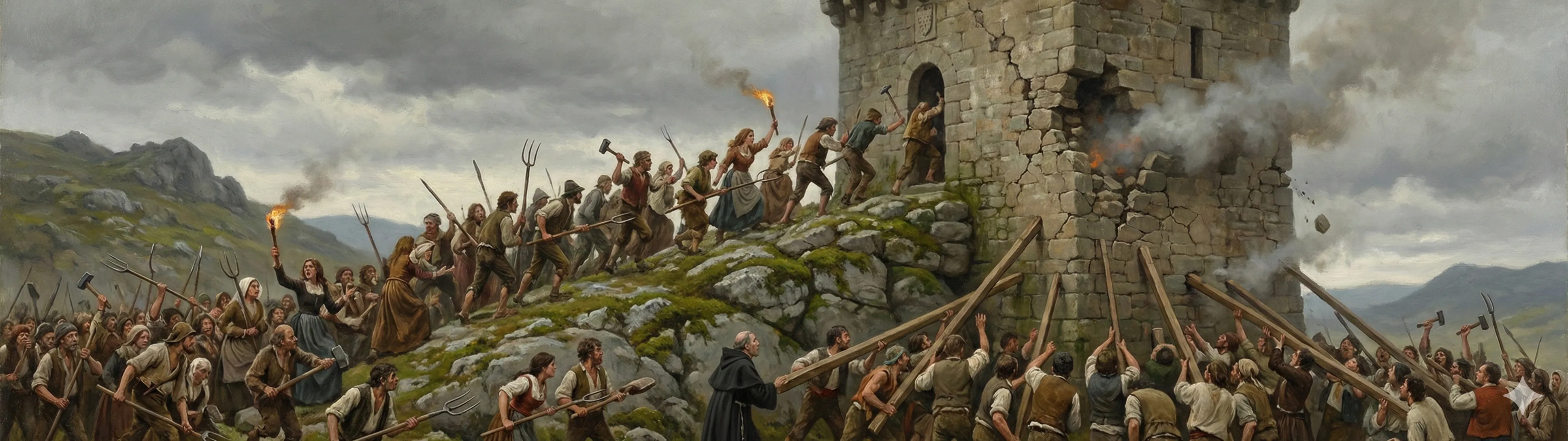
The Irmandiño Revolt: When the People Rose Against the Towers
In the 14th century, the Tower of Sande had passed to Paio Rodríguez de Araujo, lord of Araujo and Lobios, who served King Juan I of Castile and controlled the parishes of Lobios, Xendive, and Milmada. The fortress continued to function as a centre of seigneurial power over the surrounding countryside.
Then came the great convulsion. The Revolta Irmandiña (1467-1469) was one of the largest popular uprisings in medieval European history. Tens of thousands of Galician commoners — peasants, artisans, minor clergy, and even some lesser nobles — rose against the aristocratic towers that symbolised feudal oppression. Across Galicia, the irmandiños systematically attacked and demolished seigneurial fortresses. The Torre de Sande was among those besieged and destroyed. Though subsequently rebuilt, the tower never regained its former military significance. The uprising marked the beginning of the end for the old Galician warrior nobility.
- Paio Rodríguez de Araujo held the Tower of Sande in the 14th century
- Tens of thousands of Galician commoners rose against the seigneurial fortresses
- The Torre de Sande was attacked, besieged, and destroyed by the irmandiños
- The tower was rebuilt after the revolt but lost its military significance
- The uprising fundamentally weakened the old Galician feudal aristocracy
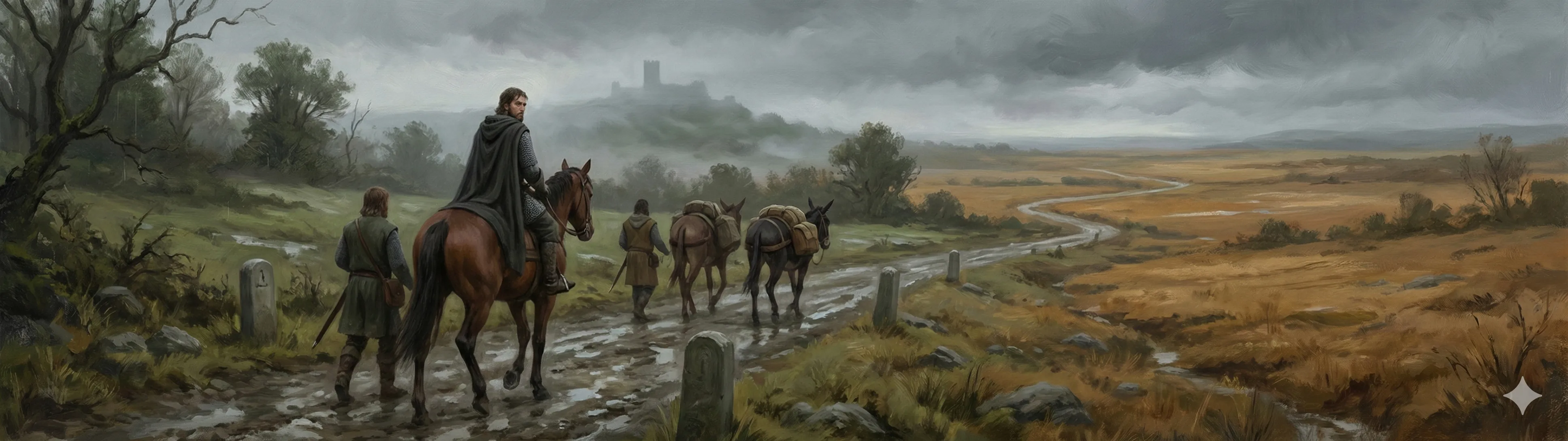
The Scattering: From Galicia to Extremadura and Portugal
Reduced in status after the 1141 confiscation, and with their ancestral fortress later destroyed by the irmandiños, the Sande family gradually dispersed across the Iberian Peninsula. The first Sande knight to leave Galicia for Extremadura donated his remaining Galician lands to the Convent of Celanova before departing south, establishing the family in Cáceres, where they became part of the urban lower nobility.
Meanwhile, Lopo Afonso de Sande fled to Portugal at the beginning of the reign of João I (c. 1385), reportedly after defenestrating an abbot of Celanova — an echo, perhaps, of the original crime. His brother Pedro Lopes de Sande remained in Castile. From these branches arose extraordinary figures: Álvaro de Sande (c. 1489-1573), hero of the Spanish Tercios who captured the Elector of Saxony at Mühlberg; Francisco de Sande y Picón (c. 1540-1602), Governor of the Philippines who founded Nueva Cáceres; Rui de Sande, ambassador of João II whose diplomacy led to the Treaty of Tordesillas (1494); and Francisco de Melo e Torres, 1st Marquis of Sande, who negotiated the marriage of Catherine of Braganza to Charles II of England.
- The first Sande knight to go south donated his Galician lands to Celanova before leaving
- The Extremaduran branch established themselves in Cáceres as urban hidalgos
- Lopo Afonso de Sande fled to Portugal c. 1385 — founding the Portuguese branch
- Álvaro de Sande (c. 1489-1573): hero of Mühlberg, Djerba, Malta; Governor of Milan
- Francisco de Sande (c. 1540-1602): Governor of Philippines, founded Naga City

A Tower in Danger: The Fight to Save Sande
Today the Torre de Sande stands in private hands, owned by the Reza family, in a state of severe deterioration. Significant structural cracks threaten the tower with imminent collapse. In 1949, the fortress was declared a Bien de Interés Cultural (BIC) and protected under Spanish heritage law. Despite this legal protection, decades of abandonment have taken their toll.
In 2020, the tower was added to the Lista Roja de Patrimonio (Red List of Heritage in Danger) maintained by Hispania Nostra, bringing international attention to its precarious condition. The cultural loss would be immense: the Torre de Sande is not merely a ruin but a tangible connection to nine centuries of Galician history — from the royal counts of the Reconquista to the great irmandiño revolt, from the splendour of the medieval lordships to the silent decay of rural Galicia. The carved Sande coat of arms above the entrance still watches over the valley of the Arnoia, waiting.
- The tower is in private ownership (Reza family) and in severe structural danger
- Declared Bien de Interés Cultural (BIC) in 1949 — legally protected national heritage
- Added to the Lista Roja de Patrimonio by Hispania Nostra in 2020
- The carved Sande coat of arms survives above the entrance arch
Notable Members
From the royal counts of Asturias to the governors of the Spanish Empire
Mayordomo Mayor of Alfonso III, [Count of Coimbra](https://pt.wikipedia.org/wiki/Condado_de_Coimbra). Ancestor of both the lords of Sande and San Rosendo, who founded the Monastery of Celanova in 936.
Established the family seat at the Tower of Sande in Cartelle, Ourense.
Killed the abbot of Celanova. His castle was confiscated by Alfonso VII.
Held the Tower of Sande. Served King Juan I of Castile.
Fled to Portugal after a conflict with Celanova. Founded the Sande line in Portugal.
Greatest military hero of the family. Captured the Elector of Saxony at Mühlberg. Defended Djerba and Malta.
Founded Nueva Cáceres (Naga City). Led the conquest of Borneo. Later governed Guatemala and New Granada.
One of the 40 Conspirators of the 1640 Restoration. Negotiated Catherine of Braganza's marriage to Charles II.
Key Dates
“The carved Sande coat of arms above the entrance still watches over the valley of the Arnoia, waiting.”— Torre de Sande, San Salvador de Sande, Cartelle