Ribadavia
Historical capital
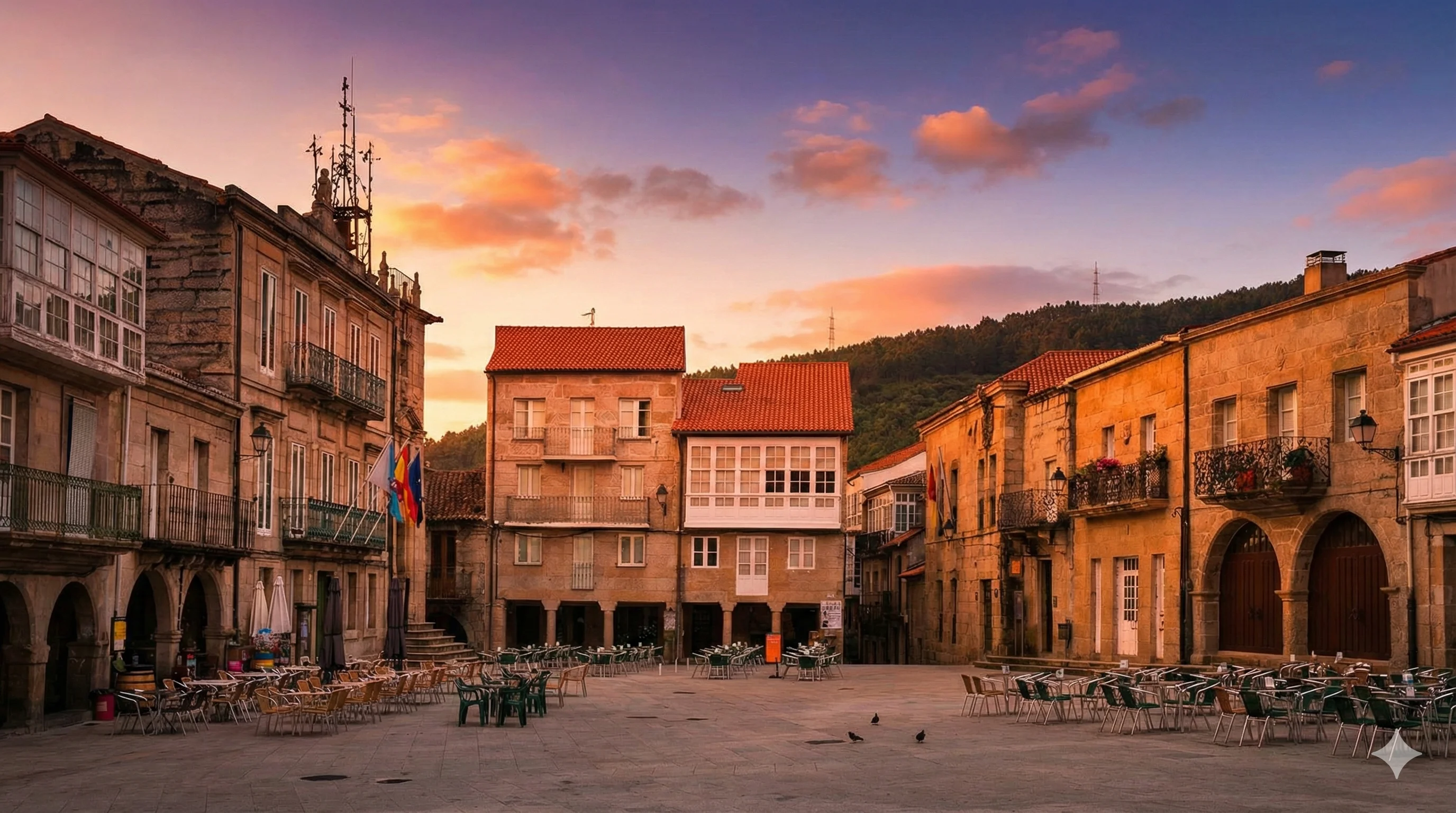
Ribadavia
Once capital of the Kingdom of Galicia, home to the best-preserved Jewish quarter in the region, and birthplace of perhaps the world's oldest wine denomination of origin.
“Give me more of the good wine from Ribadavia.”— A priest aboard Columbus's fleet, 1492 — requesting Ribeiro wine during the voyage to America
Where the Avia Meets the Miño
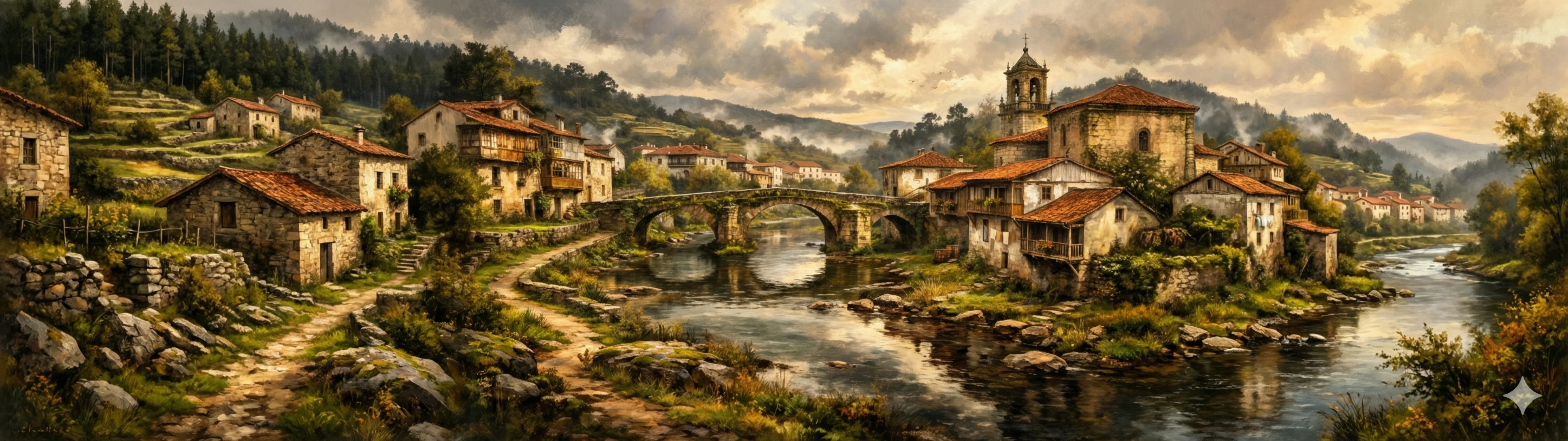
Ribadavia (from the Latin ripa Aviae, "bank of the Avia") sits on the right bank of the Miño, precisely where the Avia flows into it. Capital of the comarca of O Ribeiro in the province of Ourense, it has served as the commercial and administrative heart of Galicia's most famous wine region for nearly a thousand years.
Sheltered by mountains that create a warm microclimate far warmer and drier than the Atlantic coast, Ribadavia's position at the confluence of two rivers made it a natural site for settlement and agriculture from the earliest times. The town's medieval core, perched above the riverbanks, preserves one of the most remarkable urban landscapes in all of Galicia.
- Located in southwest Ourense province, Galicia, at the Avia-Miño confluence
- Capital of the comarca of O Ribeiro, one of Spain's oldest wine regions
- Declared an Artistic Historical Complex (Conjunto Histórico-Artístico) in 1947
- The warm microclimate produces summer temperatures regularly exceeding 35°C
From Castros to Roman Roads
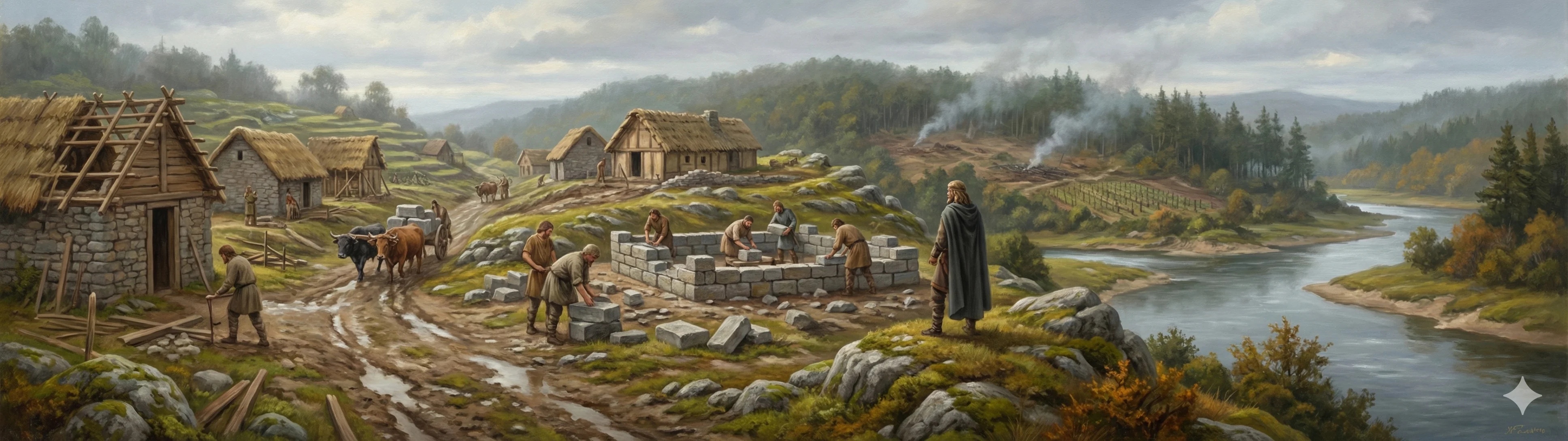
The river valleys around Ribadavia were inhabited long before written history. Neolithic communities built megalithic monuments — dolmens and mámoas — dating to approximately 4000-3000 BC across the hillsides. By the Bronze Age, sophisticated metalworking had developed, as evidenced by gold ornaments and bronze tools found in the Miño valley. The famous castros — fortified Celtic hilltop settlements — dotted the landscape, with notable examples at Castromao.
The Roman conquest of Gallaecia in the 1st century BC brought transformative change. The Romans introduced systematic viticulture, building upon native wild vines. Wine production was established by the 2nd century BC, as confirmed by winepresses discovered in the area. Roman roads, including Via XVIII connecting Bracara Augusta (Braga) to Asturica Augusta (Astorga), facilitated trade throughout the region.
- Megalithic monuments near Ribadavia date to approximately 4000-3000 BC
- Castro culture sites are found throughout the Avia valley, notably at Castromao
- Evidence of wine production from the 2nd century BC — winepresses discovered in the area
- Wild grape vines (Vitis vinifera sylvestris) were native to these river valleys
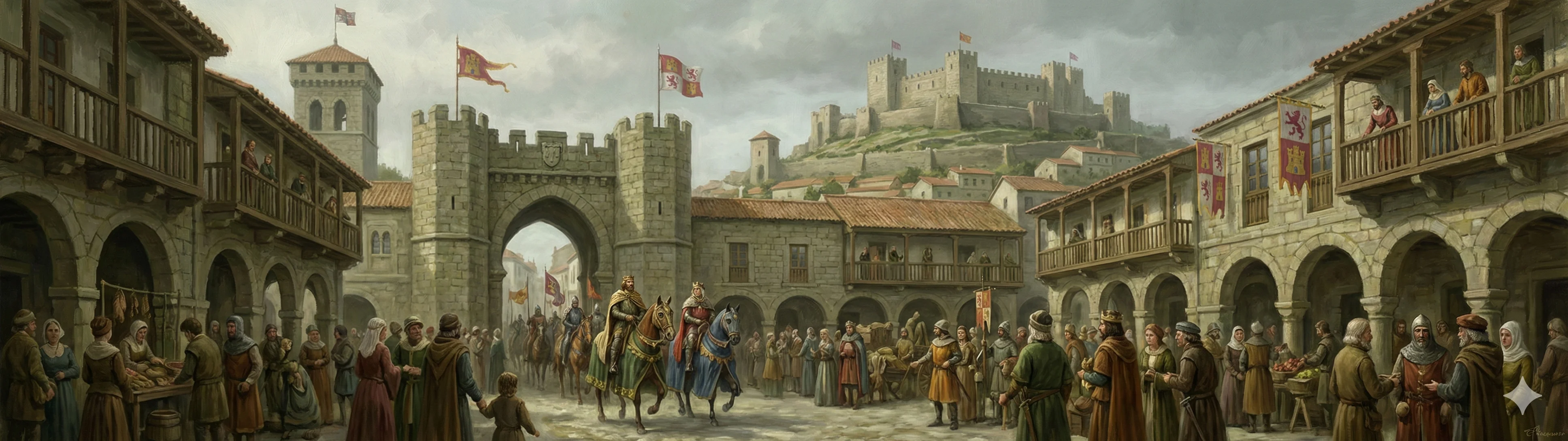
Capital of the Kingdom of Galicia
In 1065, King Fernando I of León divided his lands among his three sons. The youngest, Garcia II, received the Kingdom of Galicia — encompassing what would become both Galicia and Portugal. Garcia chose Ribadavia as his capital and styled himself "King of Galicia and Portugal," becoming the first monarch to use the title "King of Portugal." This brief but pivotal reign (1065-1071) transformed a riverside settlement into a royal seat. Garcia II was himself a descendant of Ordoño II and Elvira Menéndez through the Leonese royal line — Elvira being the daughter of Count Hermenegildo Gutiérrez, traditional ancestor of the Casa de Sande.
Though Garcia's reign ended when his brothers Alfonso VI and Sancho II imprisoned him, the town's time as a royal capital sparked its growth. Ribadavia received its founding charter (fuero) around 1065, establishing it as a formal municipality. Historians traditionally date the first Jewish settlement in Ribadavia to this period, drawn by the opportunities of the royal court and the expanding town — though no municipal documents survive to confirm this, and the earliest recorded mention of Jews in Ribadavia dates to 1386. Jewish communities were already present in the broader region: documents from the nearby Monastery of San Salvador de Celanova archives record Jewish merchants under noble protection as early as 1044. The founding charter laid the foundations for what would become one of medieval Iberia's most prosperous commercial centres.
- Garcia II chose Ribadavia as capital of the Kingdom of Galicia and Portugal (1065-1071)
- He was the first monarch to style himself "King of Portugal"
- The founding charter (fuero) of c. 1065 established Ribadavia as a formal municipality
- Jewish settlement in Ribadavia traditionally dated to Garcia's court, though the earliest recorded mention is from 1386; Jewish merchants documented in nearby Monastery of San Salvador de Celanova as early as 1044
- Garcia II was imprisoned by his brothers in 1071, ending Ribadavia's era as capital
- Garcia II descended from Ordoño II and Elvira Menéndez (daughter of Count Hermenegildo Gutiérrez, ancestor of the Casa de Sande) through the Leonese royal line
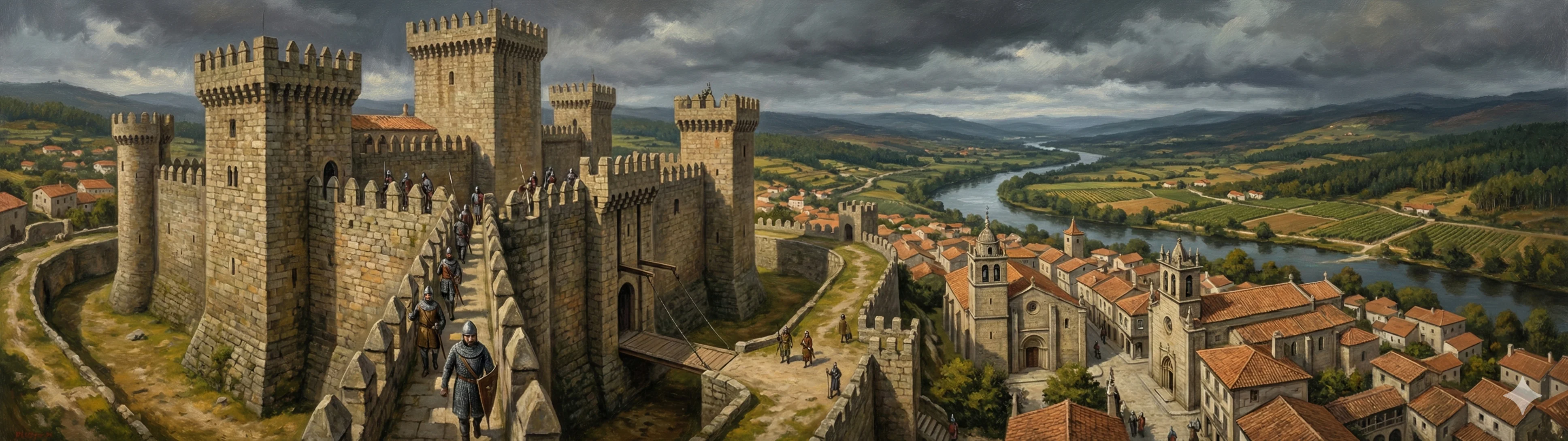
Castelo dos Condes de Sarmiento
The Castle of the Counts of Sarmiento stands on a promontory overlooking the river Avia. Its origins trace to the 9th century, though the definitive construction was completed in the second half of the 15th century. In 1375, King Henry II of Castile granted the Lordship of Ribadavia to Pedro Ruiz Sarmiento as reward for supporting him in the dynastic war against Peter of Castile, "the Cruel." A house-tower already existed on the site.
In 1476, the Catholic Monarchs elevated the lordship to a county, granting the title of Count of Ribadavia to Bernardino Pérez Sarmiento for his aid against Juana la Beltraneja. The Sarmiento family resided in the castle from the 15th to the 17th century, when they moved to the Pazo dos Condes on the Plaza Mayor. The castle complex retains a unique necropolis with a dozen anthropomorphic tombs carved into rock, dating from the 9th-12th centuries.
- Origins trace to the 9th century; definitive construction completed in the 15th century
- In 1375, Pedro Ruiz Sarmiento received the Lordship of Ribadavia from Henry II of Castile
- In 1476, elevated to a county by the Catholic Monarchs for Bernardino Pérez Sarmiento
- Contains a necropolis with anthropomorphic tombs carved into rock (9th-12th centuries)
- Main entry features a semicircular arch with coats of arms of the Sarmiento and Fajardo families
- Today houses a modern auditorium for the International Theater Exhibition
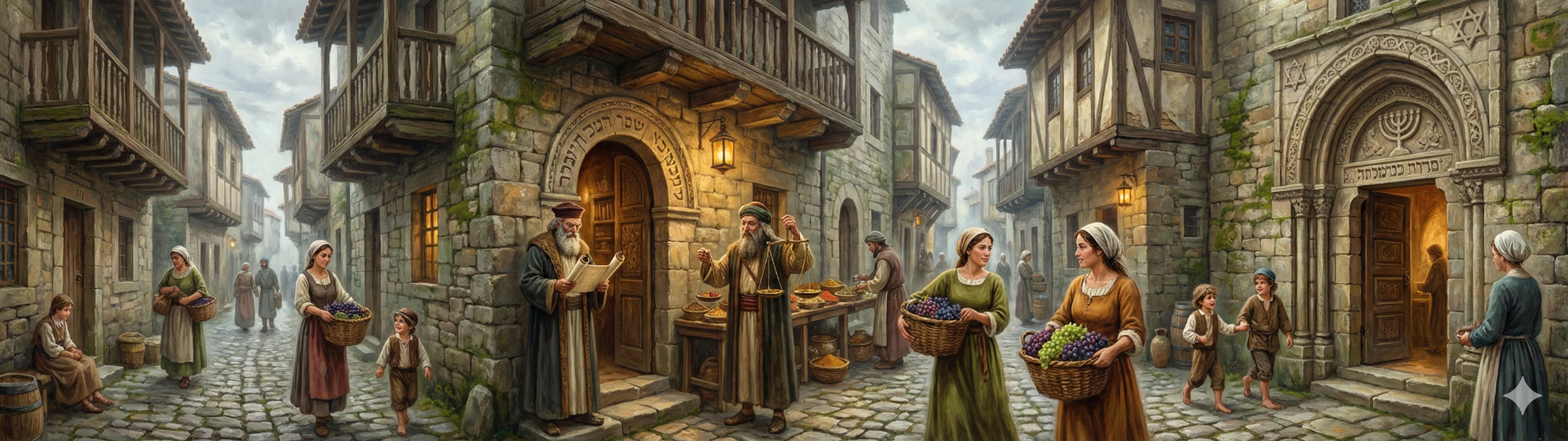
The Jewish Quarter of Ribadavia
Ribadavia's Jewish quarter is the most important and best-preserved in all of Galicia, and one of the most significant in Spain. The town is a member of the Red de Juderías de España (Network of Jewish Quarters of Spain), part of the Caminos de Sefarad route. By 1386, approximately half of Ribadavia's population was Jewish — around 1,500 inhabitants — making it one of the largest Jewish communities in Iberia.
The judería extended from the Plaza Mayor to the medieval wall, centred on the Rúa da Xudería. The Plaza da Magdalena was another centre of Hebrew life, where the main synagogue was located. The houses of the quarter were integrated production facilities: ground-floor bodegas for winemaking with arcaded storefronts opening directly onto the street for retail. The Jewish community virtually monopolised the Ribeiro wine trade, leveraging diaspora networks to export wine across Europe.
In 1386, John of Gaunt, Duke of Lancaster, invaded Galicia claiming the Castilian throne. Most of the region submitted without resistance — but not Ribadavia. Over 2,000 English spearmen and archers besieged the town, and according to Froissart's Chronicles, Christians and Jews fought side by side to defend the walls. The English finally breached the defences using a spectacular siege tower on wheels. After taking the town they plundered it savagely, targeting the Jewish quarter in particular — Froissart recorded "great plunder of gold and silver from the houses of the Jews." This account is, remarkably, the first written record of the Jewish community in Ribadavia.
- Best-preserved Jewish quarter in Galicia; member of the Red de Juderías de España
- By 1386, approximately 50% of Ribadavia's population was Jewish (~1,500 inhabitants)
- The Rúa da Xudería and Plaza da Magdalena were the heart of the community
- Jewish merchants monopolised the Ribeiro wine trade via diaspora networks across Europe
- 1386: Christians and Jews fought together to defend Ribadavia against the Duke of Lancaster's siege
- Froissart's Chronicles — first written record of Ribadavia's Jewish community
- Houses were integrated facilities: ground-floor bodegas with arcaded street-level storefronts
- Declared a National Monument; old town declared Artistic Historical Complex in 1947
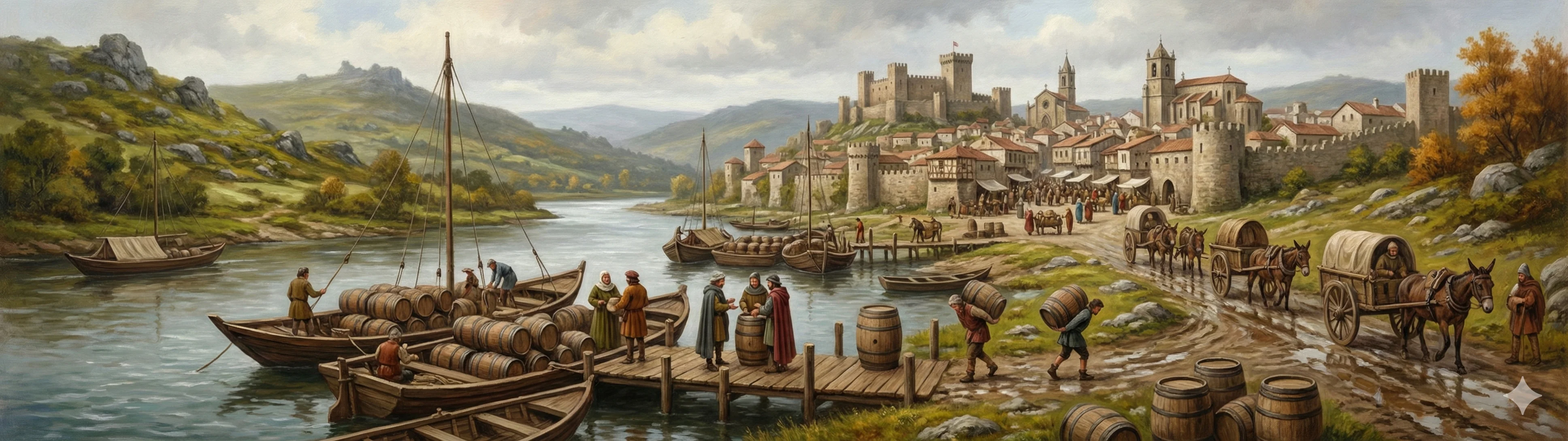
When Ribadavia's Wine Conquered the World
The 14th to 16th centuries represent the zenith of Ribadavia's prosperity. In 1386, John of Gaunt's English army besieged and sacked Ribadavia — but in doing so discovered Ribeiro wine and inadvertently opened the English market, where it became known simply as "Ribadavia." In 1492, wine from Ribadavia was loaded aboard Christopher Columbus's caravels for the voyage to America — making it the first European wine to cross the Atlantic. A priest who fell ill during the voyage asked Columbus for more of "the good wine from Ribadavia."
In 1564, a geographical denomination of origin "Ribadavia" was carefully drawn up to prevent fraudulent sales. Then in 1579, the Ordinances of Ribadavia established what may be the world's oldest wine denomination of origin — predating Portugal's Douro DOC by 177 years. The World Intellectual Property Organization (WIPO) recognises these ordinances as the oldest regulatory document of a Denomination of Origin in Spain.
- 1386: John of Gaunt's army discovers Ribeiro wine — opens the English market
- 1492: Ribeiro wine sails with Christopher Columbus to America — the first European wine to cross the Atlantic
- 1564: Geographic denomination "Ribadavia" drawn up to prevent wine fraud
- 1579: Ordinances of Ribadavia — possibly the world's oldest wine denomination of origin
- World Intellectual Property Organization recognises the 1579 Ordinances as the oldest D.O. regulatory document in Spain
- Wine prices in medieval England rivalled those of Bordeaux
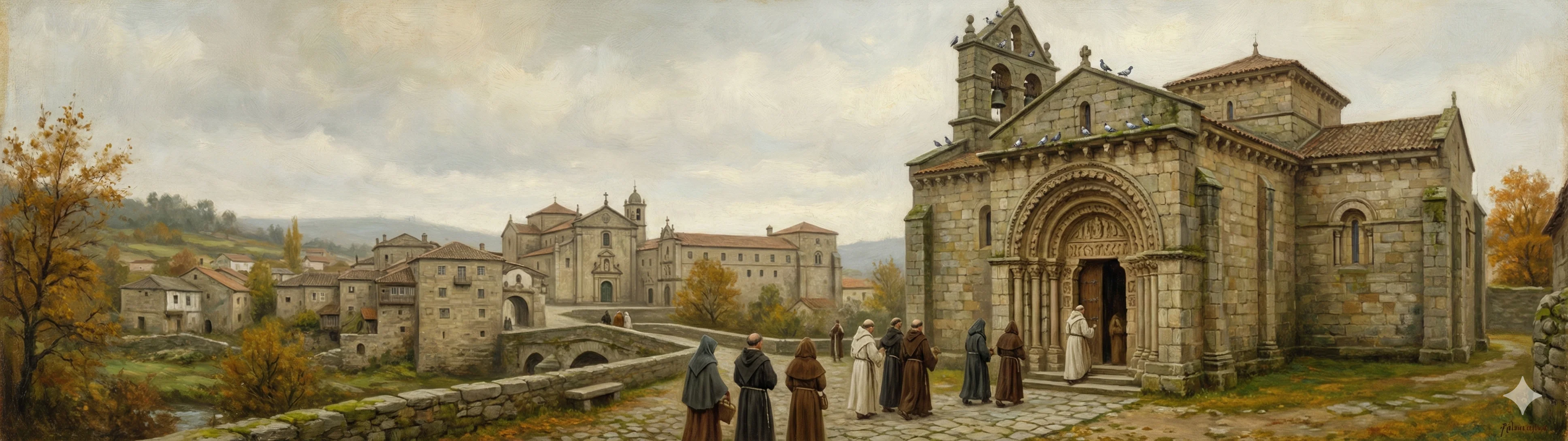
Churches & Monasteries
Ribadavia's skyline is defined by its medieval churches. The Church and Convent of Santo Domingo, built in the 13th-14th centuries in Gothic architecture, was the second convent of the Dominican Order in Galicia. From 1299 it functioned as a house of studies for Theology, Morals, and Grammar. Declared a National Monument in 1931, it is considered one of the finest examples of Gothic architecture in Galicia.
The Church of San Xoán, erected in the 12th century in Romanesque architecture, was under the jurisdiction of the Knights Hospitaller, who cared for pilgrims travelling to Santiago de Compostela. The Church of Santiago, a late Romanesque structure, is notable for its spectacular doorway. The Convent of San Francisco, completed in 1610, became the third most important Franciscan community in Galicia by 1818.
- Santo Domingo (13th-14th c.): Gothic, Dominican convent — National Monument since 1931
- San Xoán (12th c.): Romanesque, Knights Hospitaller — served Camino de Santiago pilgrims
- Santiago: Late Romanesque collegiate church with spectacular doorway
- San Francisco (completed 1610): Baroque, Franciscan — third most important in Galicia by 1818
- Three of five medieval gates survive: Porta Nova, Porta da Cerca, and Porta Falsa
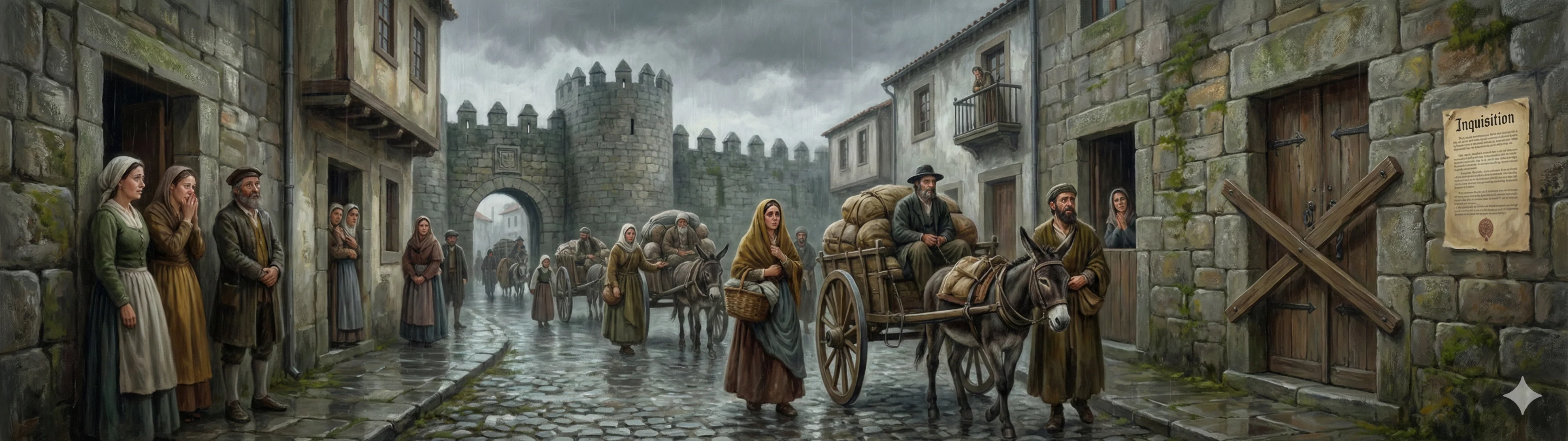
Expulsion, Conversion & Persecution
On March 30, 1492, the Edict of Expulsion issued by the Catholic Monarchs arrived in Ribadavia, granting a four-month deadline to leave Spain. Most of Ribadavia's Jews chose baptism and stayed as conversos (converts), but the Santiago tribunal of the Spanish Inquisition took harsh measures against them. The Casa da Inquisición, built in the 16th century, housed Inquisitorial activities. Its portal displays five coats of arms representing the five local families tasked with carrying out the Inquisition.
A particularly dark episode occurred in the early 17th century: Xerónimo Bautista de Mena, known locally as "the snitch," delivered a list to Inquisitorial authorities naming local families that continued secretly practising Judaism. This triggered devastating autos-da-fé (public burnings), asset seizures, and imprisonments that ruined the converso community. The loss of the Jewish merchant networks that had driven international wine exports devastated Ribadavia's economy for generations.
- 1492: Edict of Expulsion — most Jews in Ribadavia chose baptism and stayed as conversos
- The Casa da Inquisición (16th c.) displays five coats of arms of the enforcing families
- Xerónimo Bautista de Mena ("the snitch") denounced crypto-Jewish families in the early 17th c.
- Devastating autos-da-fé, asset seizures, and imprisonments ruined the converso community
- The loss of Jewish merchant networks collapsed Ribadavia's international wine trade
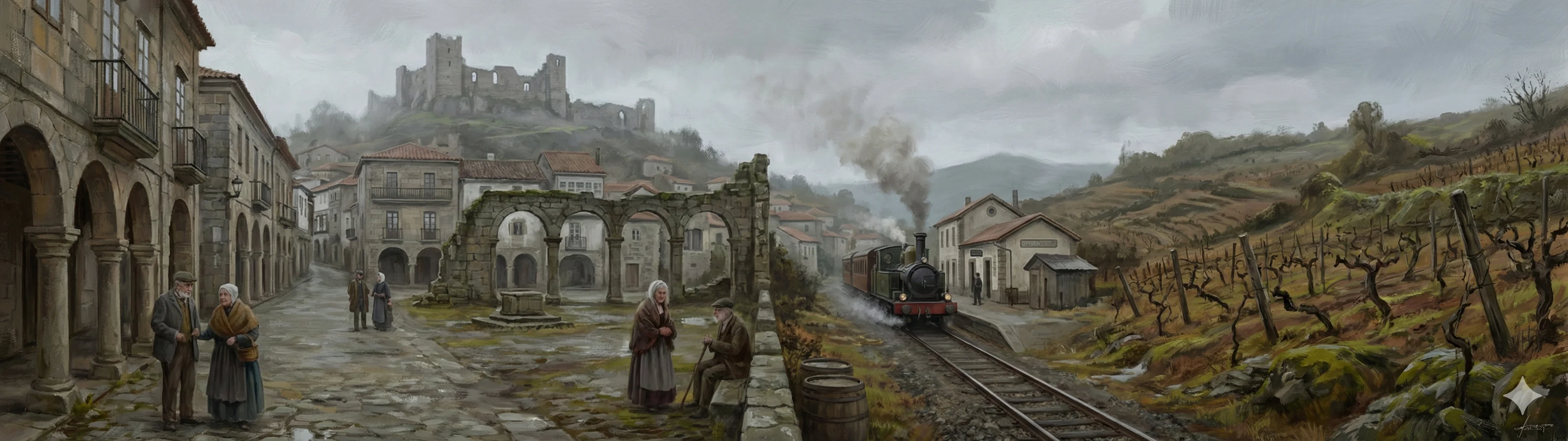
Decline, Railway & Transformation
After the destruction of the Jewish merchant networks, Ribadavia entered a long decline. Economic stagnation, competition from other wine regions, and rural poverty led to vineyard abandonment and mass emigration. On March 4, 1881, the railway station of Ribadavia was inaugurated on the Vigo-Ourense line, connecting the town to modernity, but it could not reverse the tide of decline.
The devastating phylloxera plague reached the Ribeiro around 1882-1886, destroying virtually all vineyards. Recovery was slow: many replanted with inferior Palomino grapes instead of traditional varieties. Over 80% of historic terraces were abandoned. The D.O. Ribeiro was officially established in 1957, but the true transformation came in the 1980s-1990s when pioneer winemakers began recovering indigenous grape varieties like Treixadura, restoring Ribeiro's reputation for quality.
- 1881: Railway station inaugurated on the Vigo-Ourense line
- 1882-1886: Phylloxera devastates virtually all vineyards in the Ribeiro
- Over 80% of historic terraces abandoned; many replanted with inferior Palomino grapes
- Mass emigration to Latin America fed the wider Galician diaspora
- 1957: Ribeiro D.O. officially established — one of Spain's oldest protected appellations
- 1980s-1990s: Pioneer winemakers recover indigenous grape varieties such as Treixadura
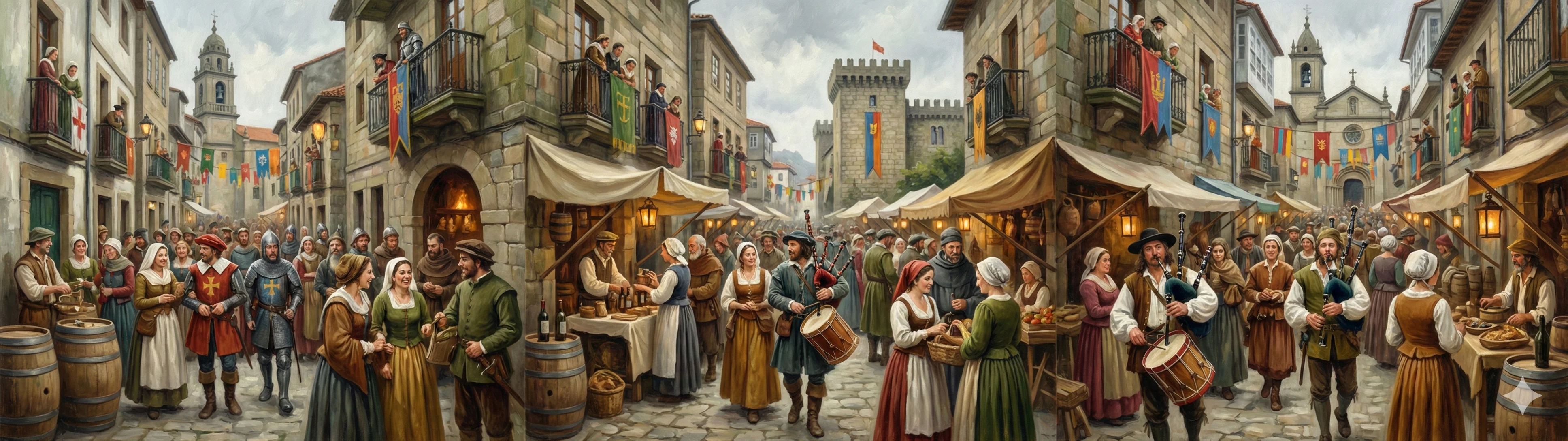
The Festa da Istoria
The Festa da Istoria is one of Galicia's most important cultural celebrations, declared a Festival of National Tourist Interest in 1997. Its origins trace to 1693, documented in municipal records from 1693 to 1865. The original festivals lasted between four and eight days, drawing people from all over the Kingdom of Galicia. Council members would ride on horseback, inviting everyone to gather in the main square to watch a play — a "historia" or "istoria" in medieval Galician.
The modern festival was revived in 1989 and now draws approximately 75,000 visitors annually. It transports visitors back to Ribadavia's golden age around 1600, when international wine exports reached their peak. Highlights include medieval dinners, falconry demonstrations, archery competitions, living chess, knight fights, and a Jewish wedding by the Sephardic rite — a unique tribute to the town's multicultural heritage. A distinctive local currency, the maravedí, is used for all transactions during the festival.
- First documented in municipal records from 1693; celebrations lasted 4-8 days
- Modern revival began in 1989; declared Festival of National Tourist Interest in 1997
- Approximately 75,000 visitors attend annually
- Features a Jewish wedding by the Sephardic rite — unique in Spain
- The maravedí is used as local currency during the festival
- Recreates Ribadavia's golden age around 1600 at the peak of wine exports
Monuments of Ribadavia
A remarkable concentration of medieval and early modern heritage — churches, castle, palace, and the finest preserved Jewish quarter in Galicia.
Key Dates
“Ribadavia, capital do Ribeiro, onde a historia e o viño se abrazan.”— Ribadavia, capital of the Ribeiro, where history and wine embrace.