History
Discover our historical and cultural heritage
History
The story of Ribadavia and the Ribeiro region, from ancient Celtic settlements to modern heritage preservation.
Ancient Times
1st c. BCCeltic & Roman Foundations
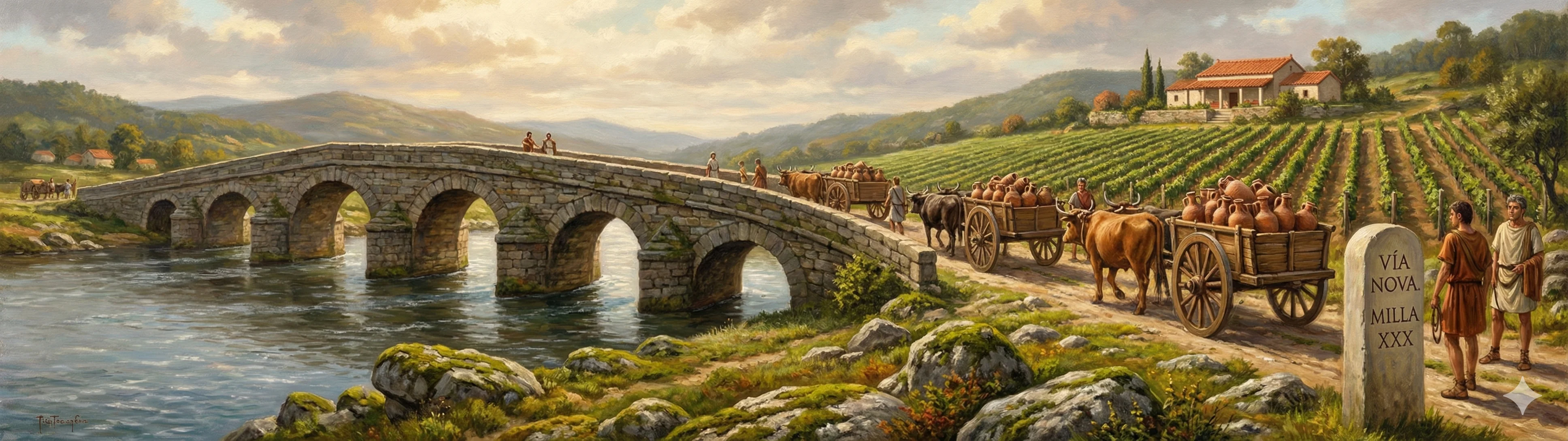
The region was inhabited by Celtic tribes before Roman conquest. The Romans established settlements and introduced viticulture.
Ancient Times
Celtic & Roman Foundations
The region was inhabited by Celtic tribes before Roman conquest. The Romans established settlements and introduced viticulture.
Early Medieval
5th — 8th c.Suevi & Visigothic Rule
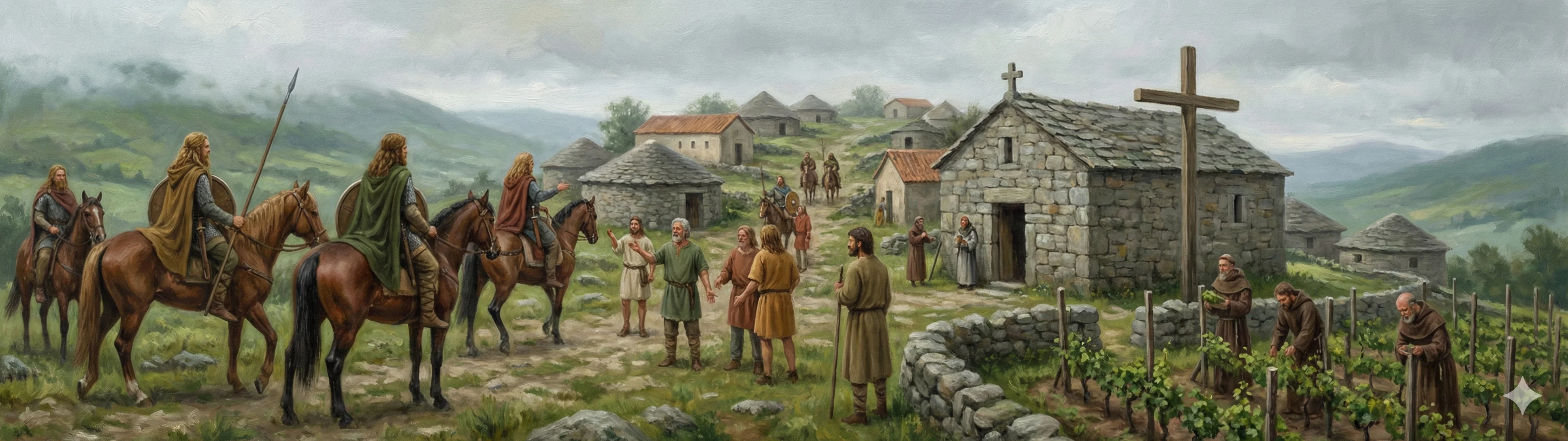
Germanic tribes established kingdoms in Galicia, leaving lasting cultural and genetic influences on the population.
Early Medieval
5th — 8th c.Suevi & Visigothic Rule
Germanic tribes established kingdoms in Galicia, leaving lasting cultural and genetic influences on the population.
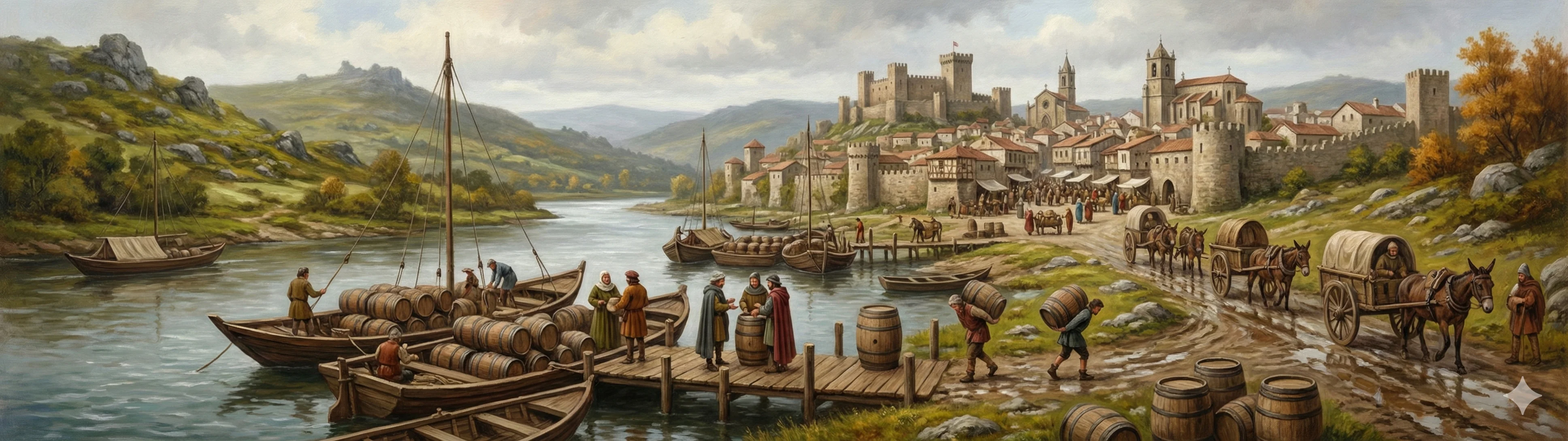
Medieval Golden Age
10th — 15th c.Rise of Ribadavia
Ribadavia became a major commercial center, home to one of the largest Jewish communities in Galicia and famous for its wines.
Medieval Golden Age
Rise of Ribadavia
Ribadavia became a major commercial center, home to one of the largest Jewish communities in Galicia and famous for its wines.
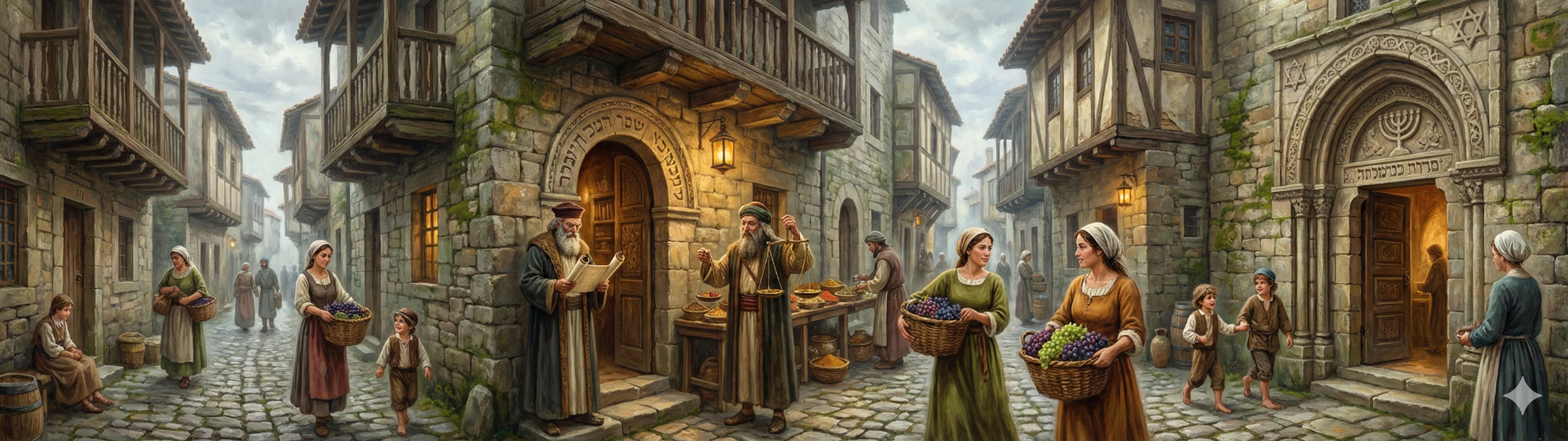
Early Modern
16th — 18th c.Transformation
The expulsion of Jews in 1492 and subsequent changes reshaped the social and economic landscape of the region.
Early Modern
16th — 18th c.Transformation
The expulsion of Jews in 1492 and subsequent changes reshaped the social and economic landscape of the region.
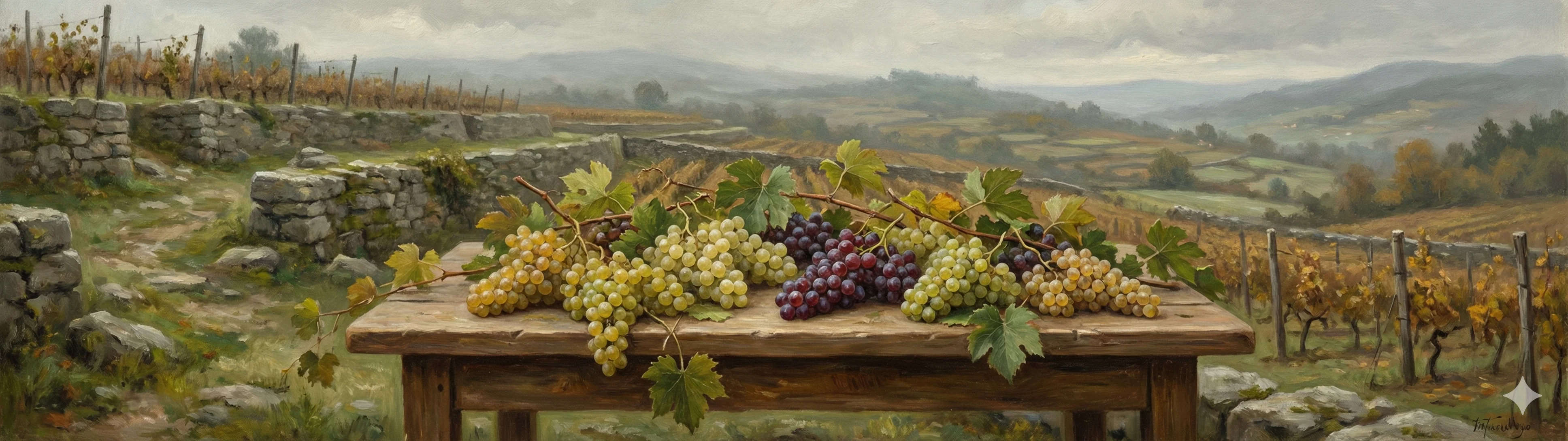
Modern Era
19th — 20th c.The Rebirth of Ribeiro Wine
After centuries of decline, the Ribeiro region reclaimed its winemaking legacy. The DO Ribeiro denomination was restored, local families revived ancestral vineyards, and the wines of the Avia and Miño valleys earned recognition once again.
Modern Era
The Rebirth of Ribeiro Wine
After centuries of decline, the Ribeiro region reclaimed its winemaking legacy. The DO Ribeiro denomination was restored, local families revived ancestral vineyards, and the wines of the Avia and Miño valleys earned recognition once again.
Historical research is ongoing. More detailed accounts of family connections to regional history will be added as documentation is gathered.