 Galicia
A guide to the Ribeiro and our families
The world our families inherited
Follow the settlements, governments, trade networks and migrations that shaped Galicia. Archaeology and historical texts reveal earlier communities; parish registers, leases and court records bring named people into view. These chapters explain the wider setting of the Ribeiro and our family archive.
In this chapter
O Ribeiro · Galicia
Peoples & encounters
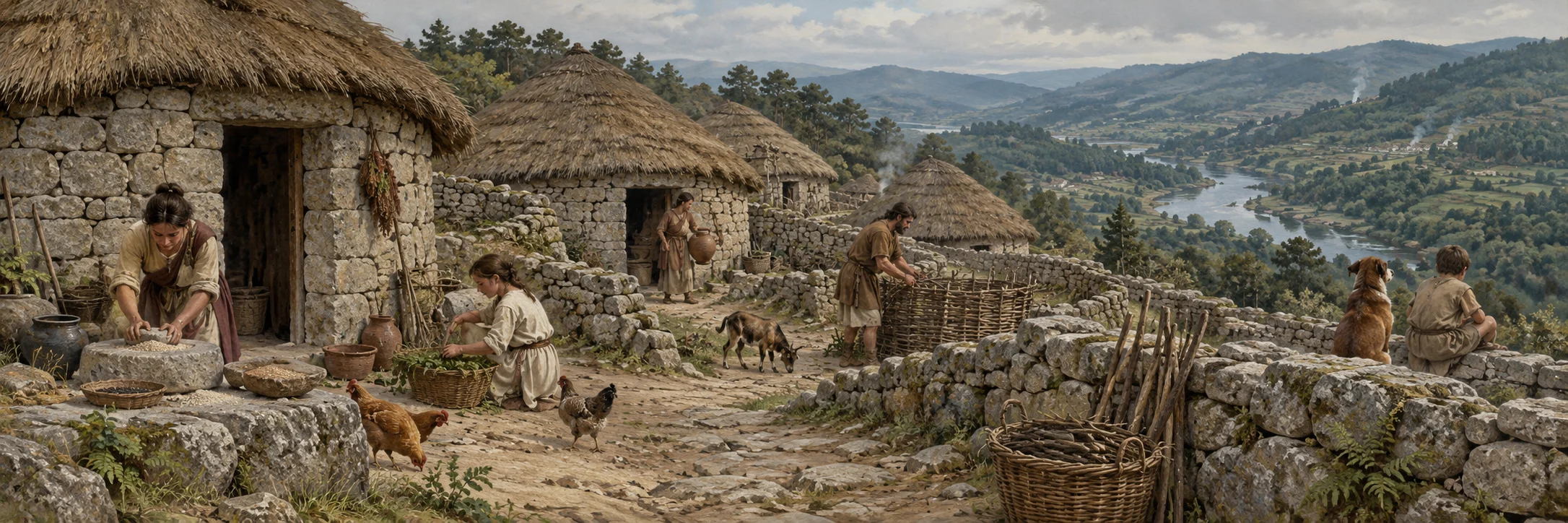 Interpretive illustration
c. 800 BC – Roman period
Castros & the Gallaeci
Above the river valleys, fortified settlements reveal the communities who lived here before and during Roman rule. Start with Castromao and San Cibrao de Las.
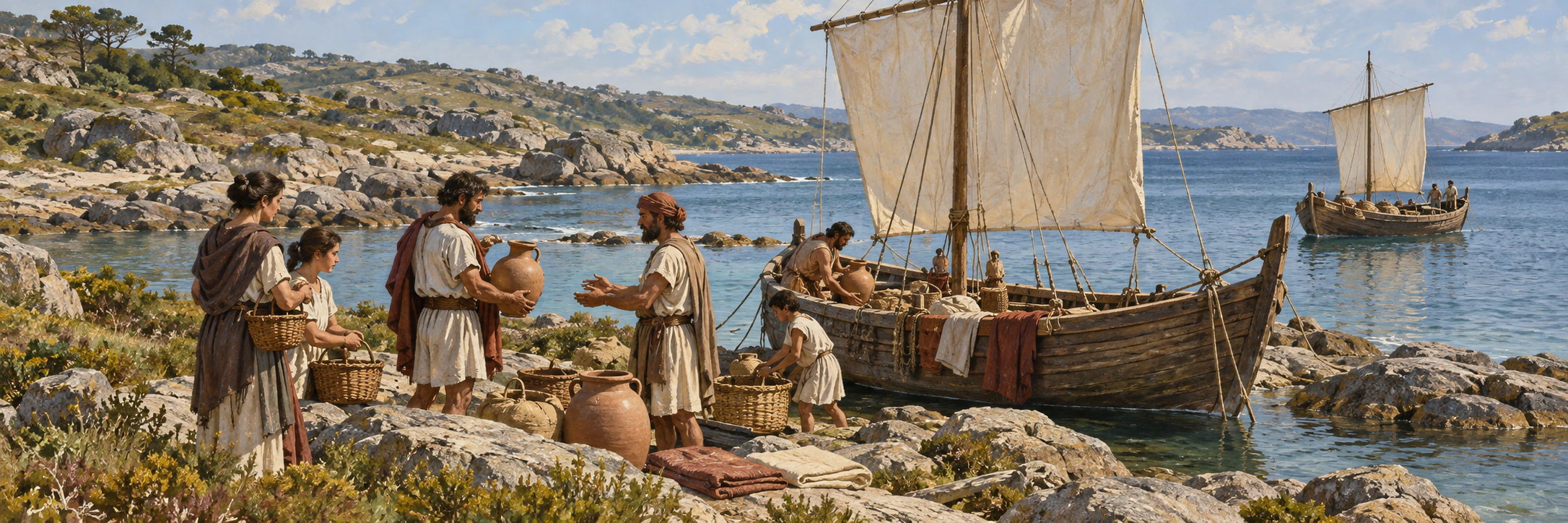
Galician evidence: 5th–1st c. BC
Mediterranean connections
Amphorae, coastal castros and Mediterranean ports reveal Galicia’s place in Atlantic exchange. Follow the objects and the people who traded them.
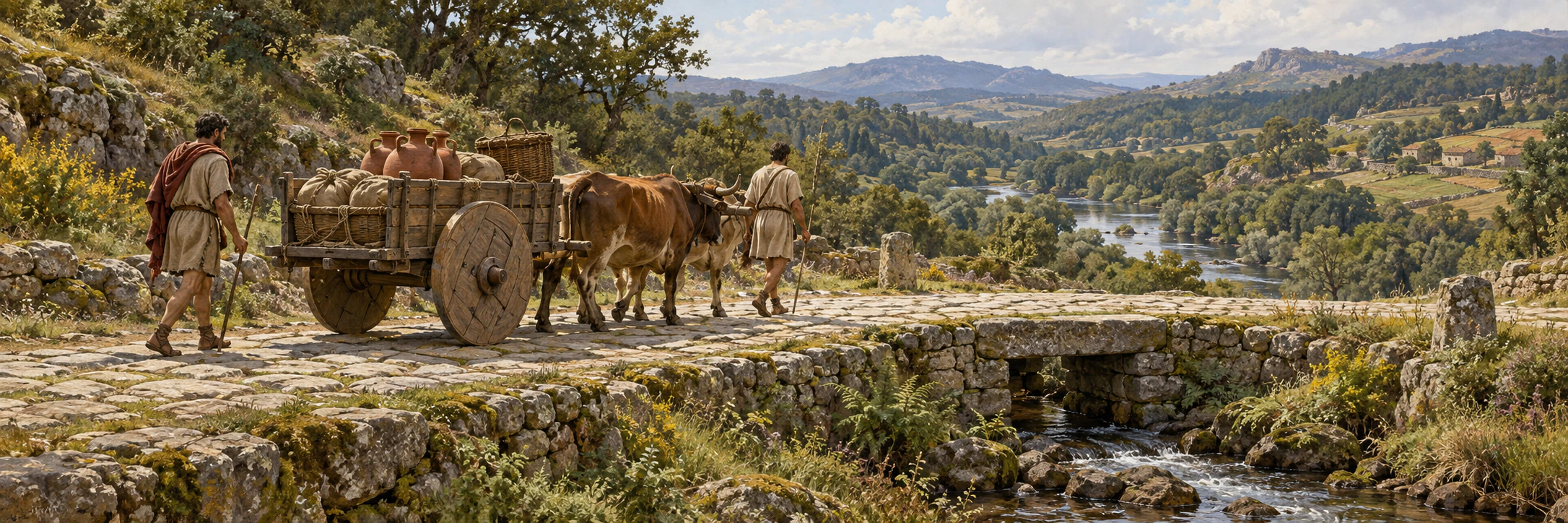
2nd c. BC – 5th c. AD
Roads, towns & Latin
Roads, towns, inscriptions and baths connected the northwest to the Roman world. The Miño valley brings that regional story closer to our villages.
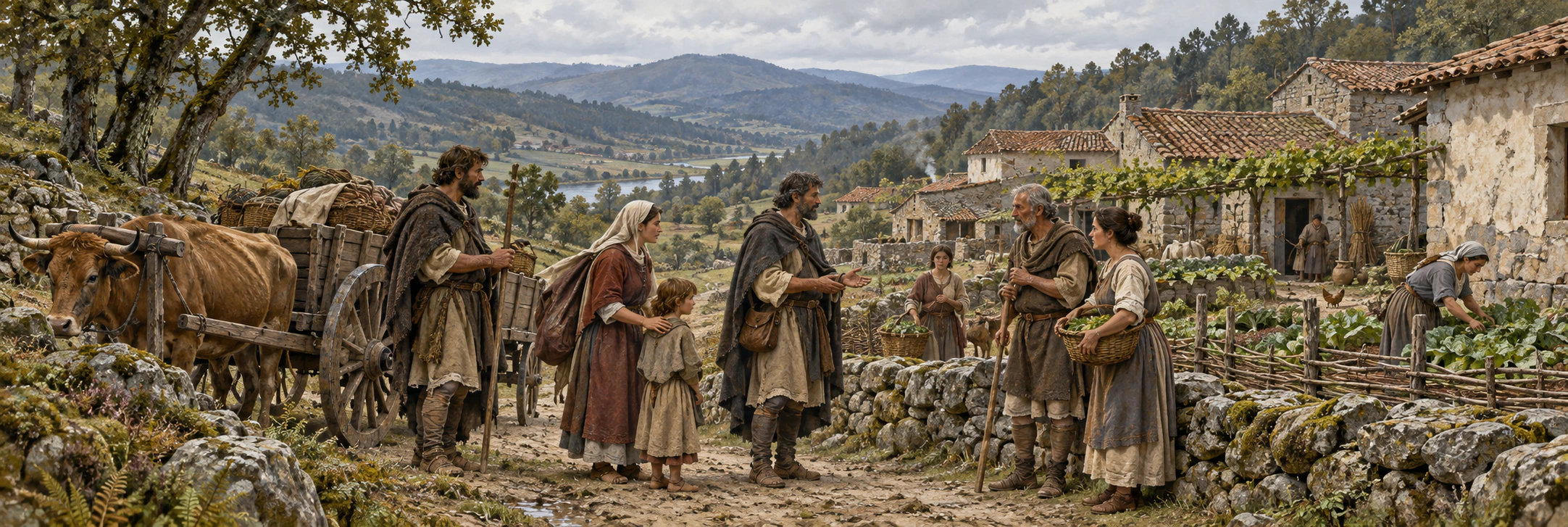
409/411–585
The Suevic kingdom
A kingdom centred on Braga reshaped power and religious life after Rome. Its church networks help explain an early chapter in the region’s history.
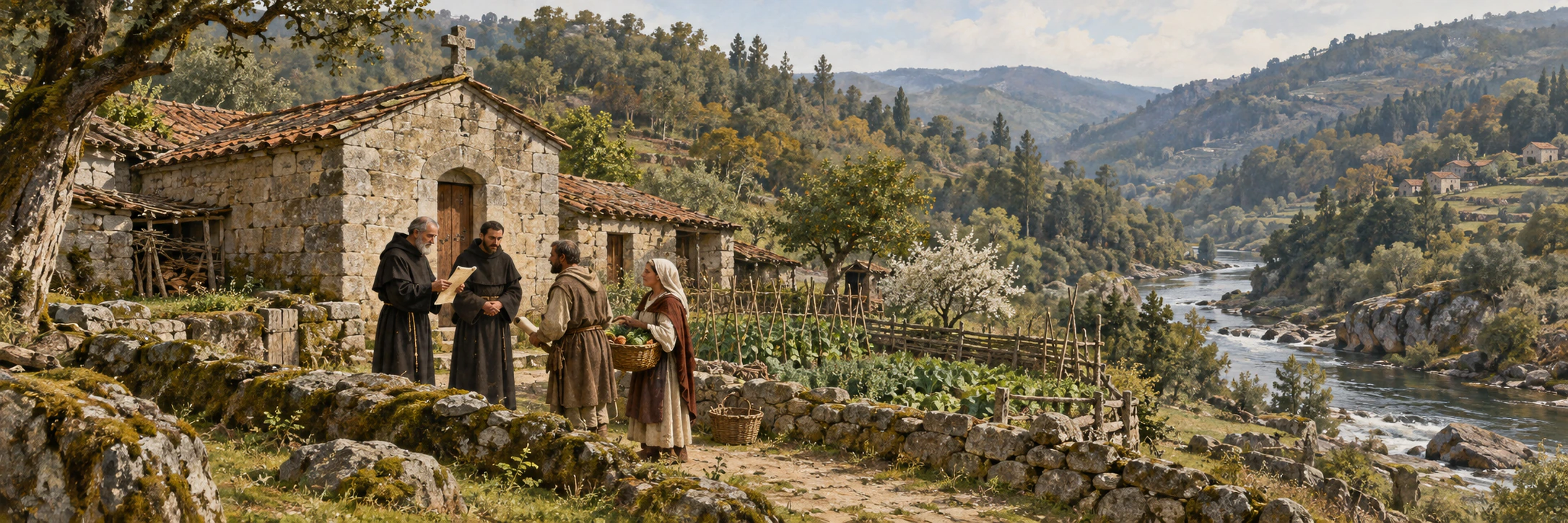
585–early 8th c.
Gallaecia under Toledo
After 585, Gallaecia belonged to the kingdom centred on Toledo. Churches, laws and changing naming traditions connect this period with the medieval world.
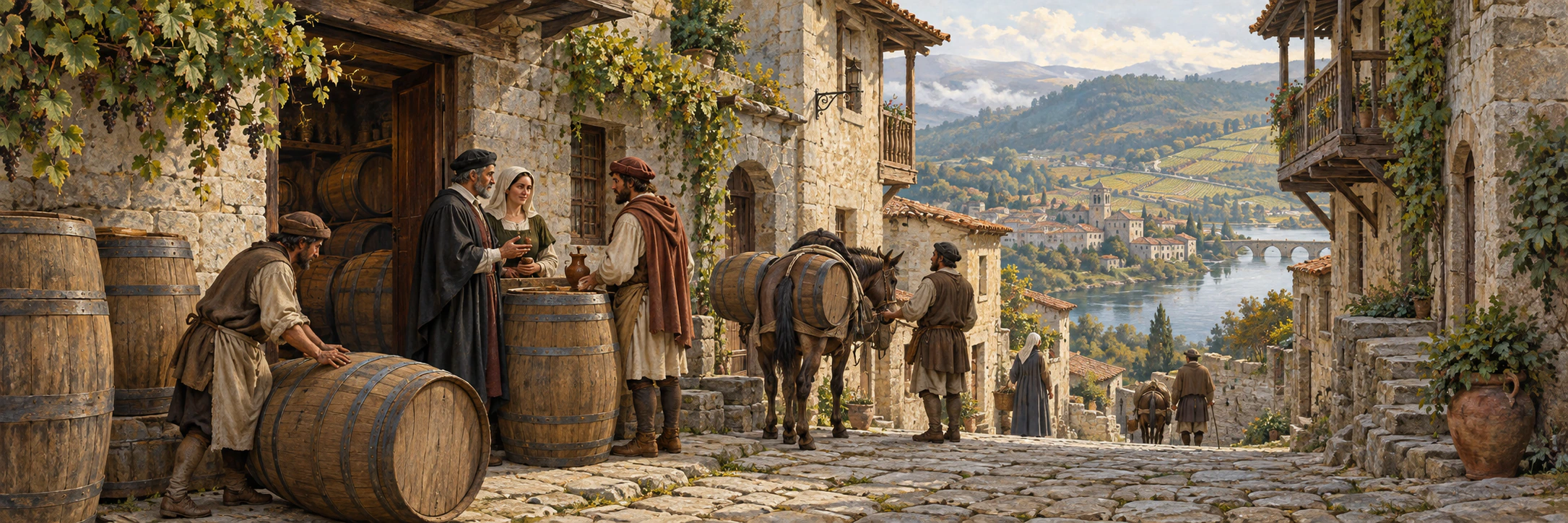
Medieval–17th c.
Jewish Ribadavia & the conversos
The story of Ribadavia’s Sephardim and conversos: the Jewish quarter and wine trade, conversions before 1492, the Inquisition, and the families who lived through it.
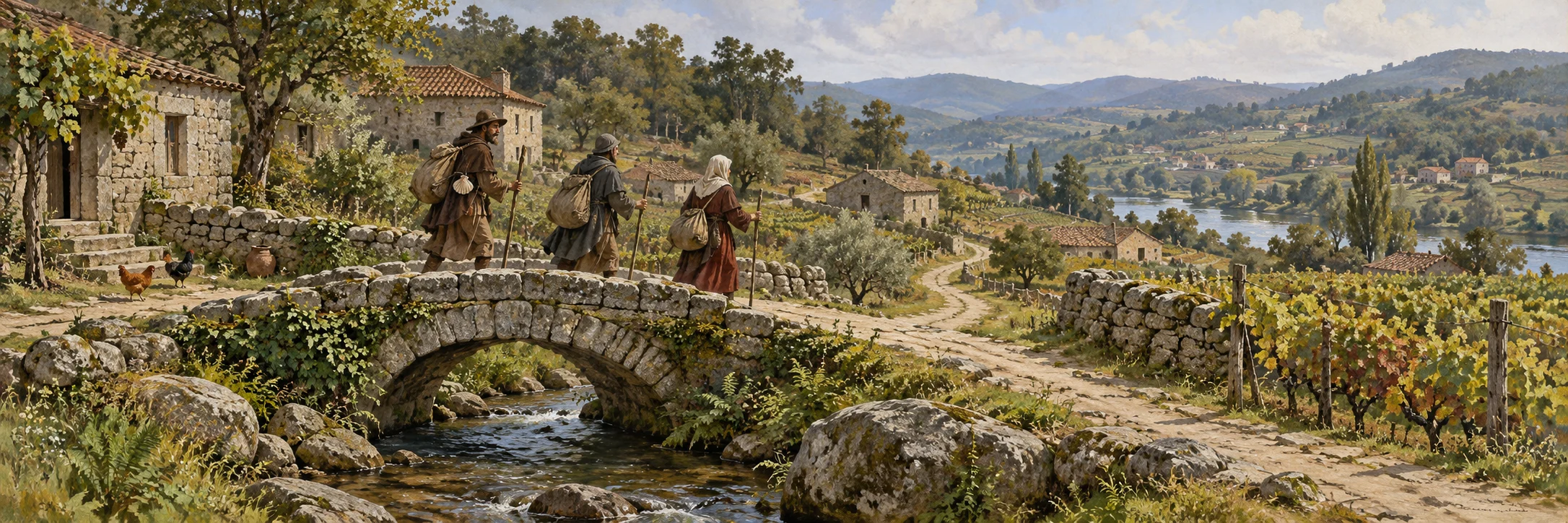 Interpretive illustration
10th–13th c. and later
Monasteries & European networks
Pilgrims, Burgundian politics and monastic reform connected Galicia to Europe. In the Ribeiro, San Clodio’s records bring the story back to vineyards and households.


Historical illustration · An imagined scene
O Ribeiro · Avia · Miño · Arnoia
Start with the place. Follow the people.
The Avia, Miño and Arnoia valleys are the thread running through this guide. Read the regional history, explore the households and surnames, then open the tree to see the relationships supported by records.