 Galicia
A guide to the Ribeiro and our families
Who held the land and power?
A vineyard, a tower, a town council and a marriage contract could all sustain a household’s influence. In the Ribeiro, hidalgos, great noble houses and religious military orders held different kinds of property and authority. Follow the Sarmientos of Ribadavia, the local houses of the Miño and the commanderies of Beade and Pazos de Arenteiro, alongside the growers, tenants and merchants whose work supported them. The wider Galician chapters explain their allies and rivals.
Explore family trees
Families in the records
Find a family tree
Search a family or a recorded name, then open its tree or read the sources.
12 of 12 trees
Start with these families
Counts of Ribadavia
147 people shown
The Sarmiento, Mendoza, Cobos, Gayoso and Henestrosa families, from the medieval lords to the succession granted to Ignacio Medina in 2003. Explore the ancestors, spouses and collateral branches.
Puga – Alvarez de Belmonte – Noboa – Enríquez
156 people shown
The Álvarez de Belmonte, Puga and Enríquez de Novoa network, reviewed against published scholarship. The proposed Pedro el Mozo–Santafé identification and converso ancestry remain unproven. Expanded with the Belmonte succession, Torre de Puga descendants, and the reported Portuguese and New Granada families, with a separate evidence level for every connection.
Pimentel – Enríquez – Lemos
68 people shown
Explore the Enríquez–Cadórniga line through Carlos and the Pimentel–Enríquez and Lemos–Enríquez lines through Apolonia. Each route keeps its sources and uncertain connections visible.
More family trees
Armada · Vide, Ribadulla & Castrelo
102 people shown
Don Ambrosio Taboada and his sons
3 people shown
Don Bernardo Álvarez de Castro and his son
2 people shown
Don Gregorio Gonz. and his children
3 people shown
Don Juan Álvarez de Novoa
7 people shown
Don Pedro Mosquera and his children
4 people shown
Doña Leona de Noboa y Araújo and her children
4 people shown
Puga · Louredo, Roucos & Regodeigón
316 people shown
The Rey and Alvarez de Verea of Arnoia
18 people shown
Each tree follows cited sources. Proposed and disputed connections remain marked; regional trees do not establish kinship with our own family.
Continue to the history chaptersO Ribeiro · Galicia
Houses & power
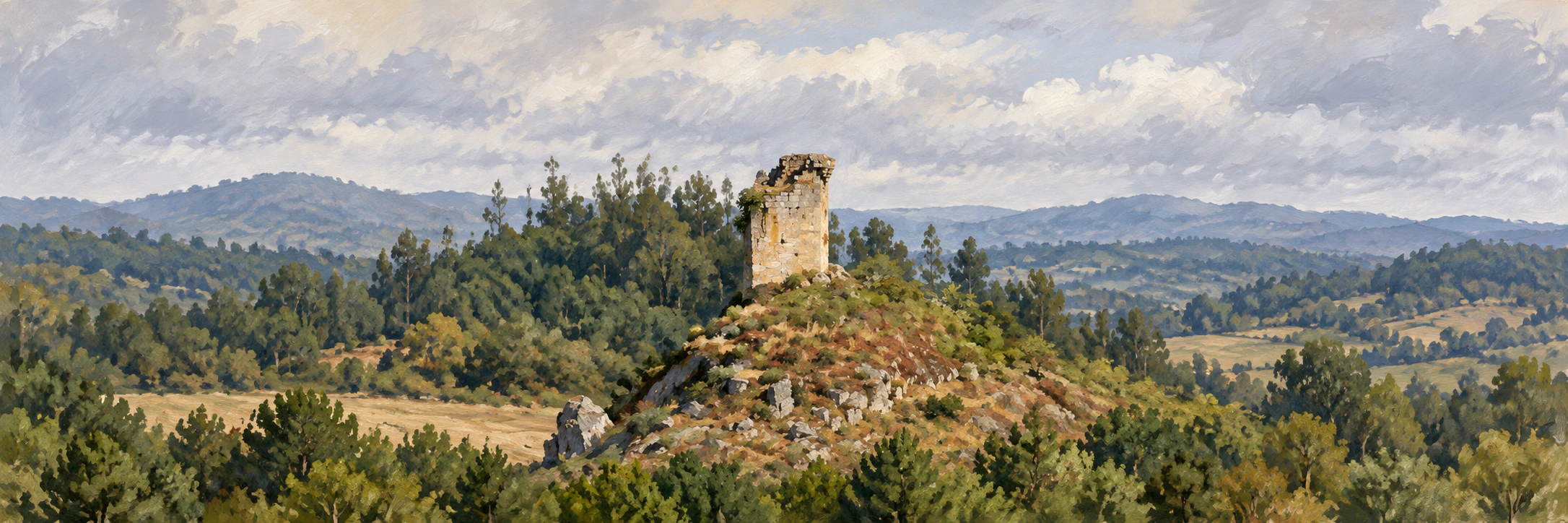
Medieval Cartelle
Sande · A tower in Cartelle
The fortress of Sande places this story in Cartelle. Follow the tower, the influence of Celanova and the families recorded around it.
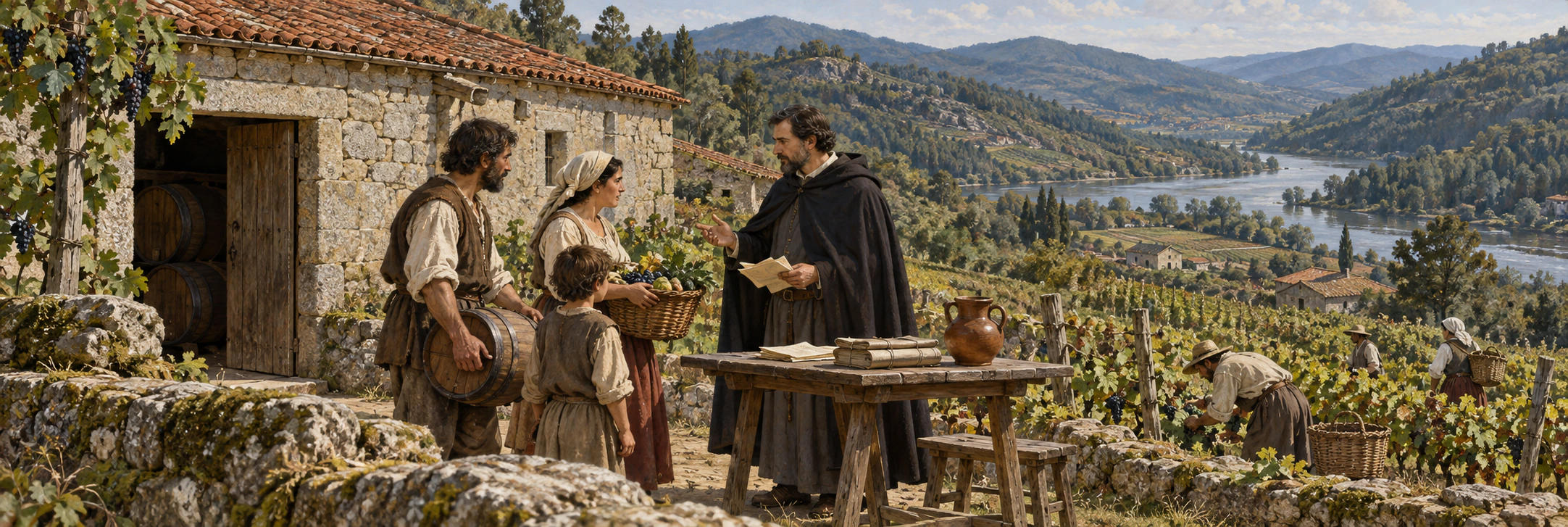
Medieval–early modern
Military orders · Land & wine
Military orders held churches, estates and rents. Beade and Pazos de Arenteiro show how their commanderies connected religious life to the wine economy.
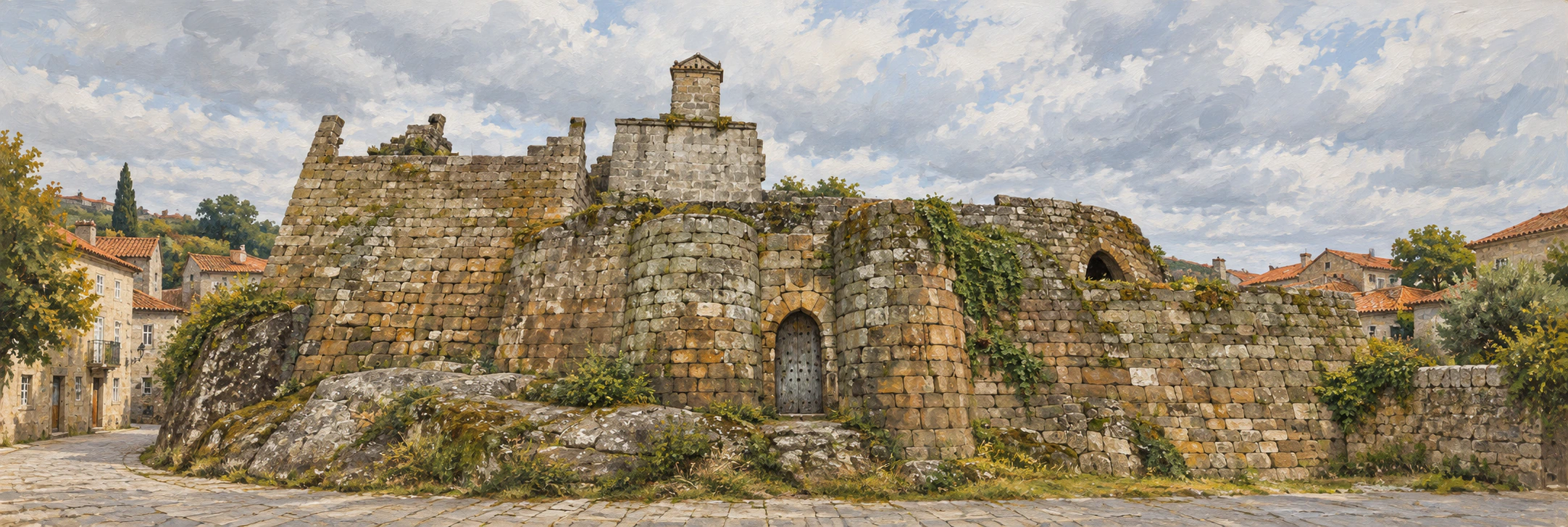
14th–16th c.
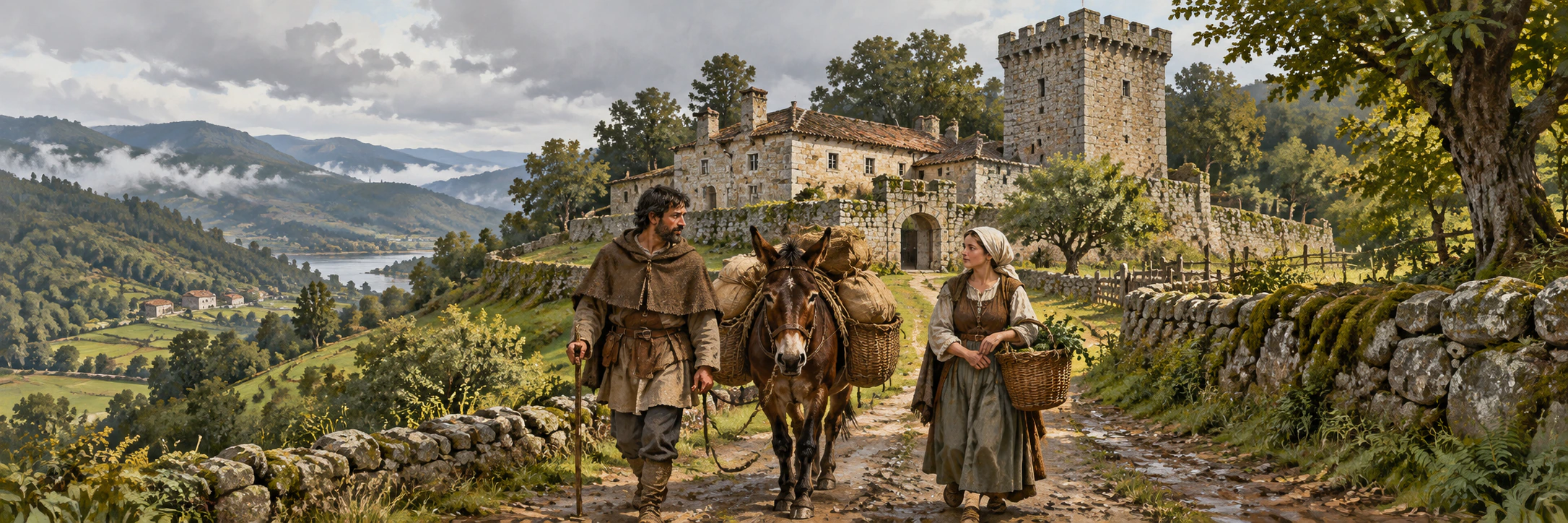
Sarmiento · Lords of Ribadavia
Ribadavia’s castle opens a story of royal service, lordship and conflict. Read the counts’ history alongside the town’s growers, merchants and Jewish residents.
12th–15th c. and later
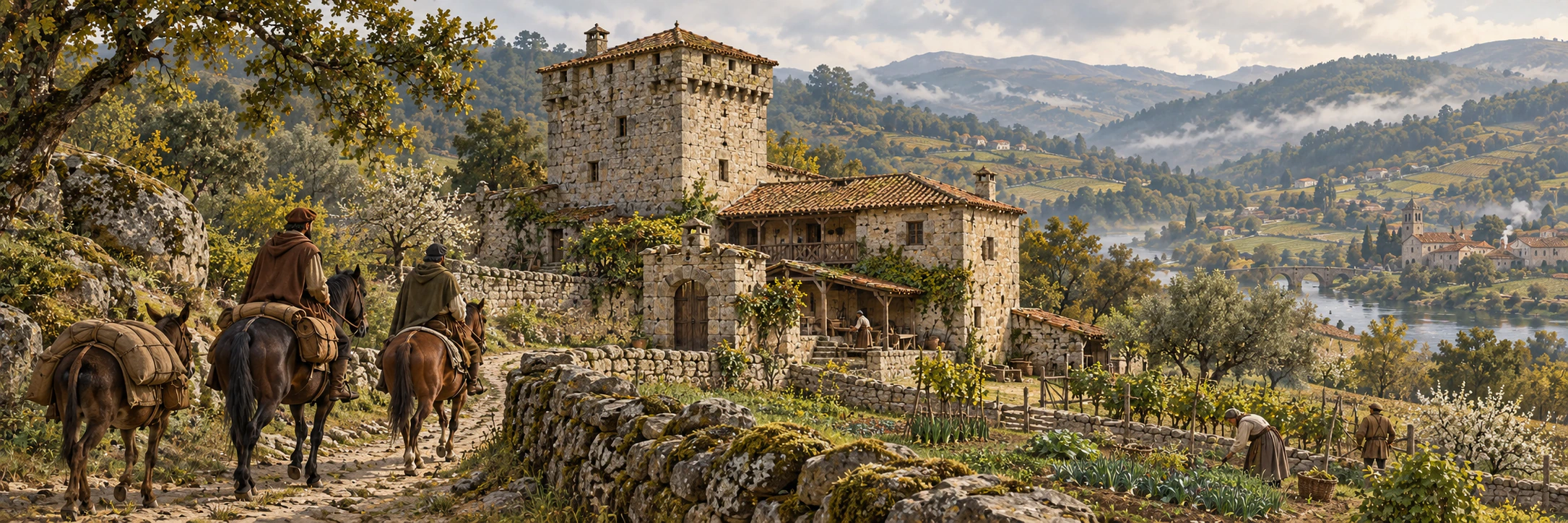
Soutomaior · Rivals & alliances
A castle in the Verdugo valley, alliances across Galicia and the struggles of Pedro Madruga: the wider political world surrounding the Ribeiro.
Medieval–early modern
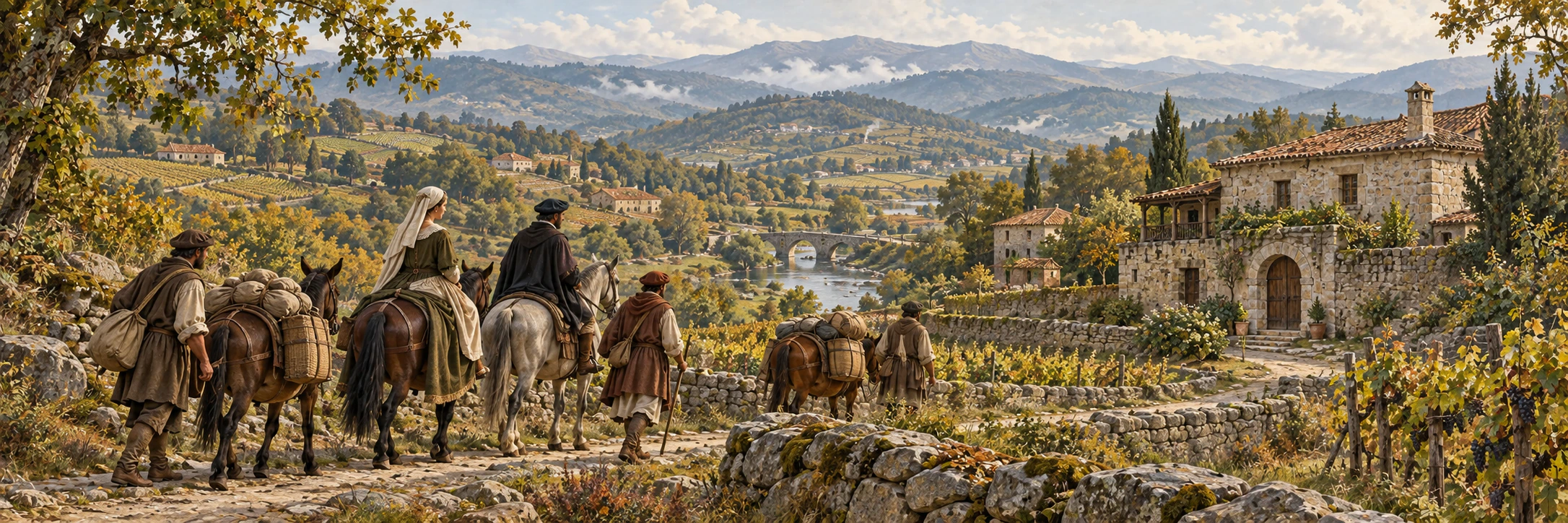
Castro · Power across Galicia
The Castro and the counts of Lemos show the reach of great Galician houses. Estates, marriages and royal loyalties connect their story across regions.
14th–17th c.
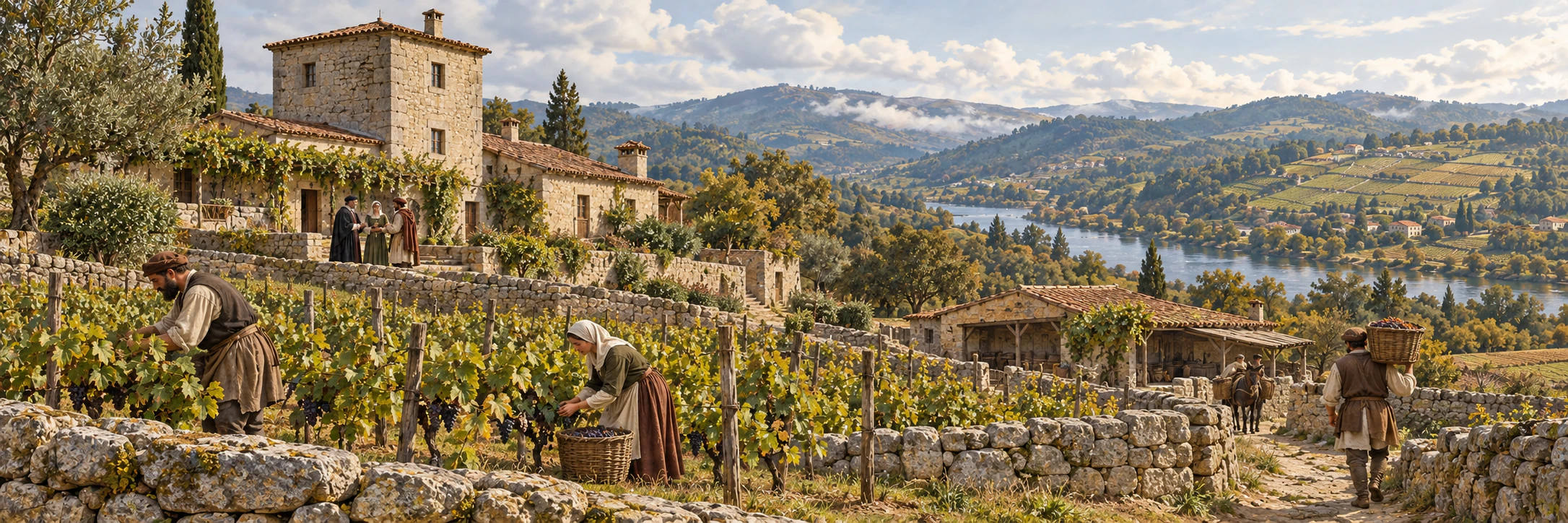
Zúñiga–Biedma · Inherited power
Marriage and inheritance joined the Biedma, Ulloa and Zúñiga interests. Follow the house of Monterrey from its Galician estates to the royal court.
Late medieval–early modern
Armada · Puga · Mosquera
An Armada inheritance, Puga monuments and Mosquera church rights reveal how local households built influence around the Miño and Ourense.
Late medieval–early modern
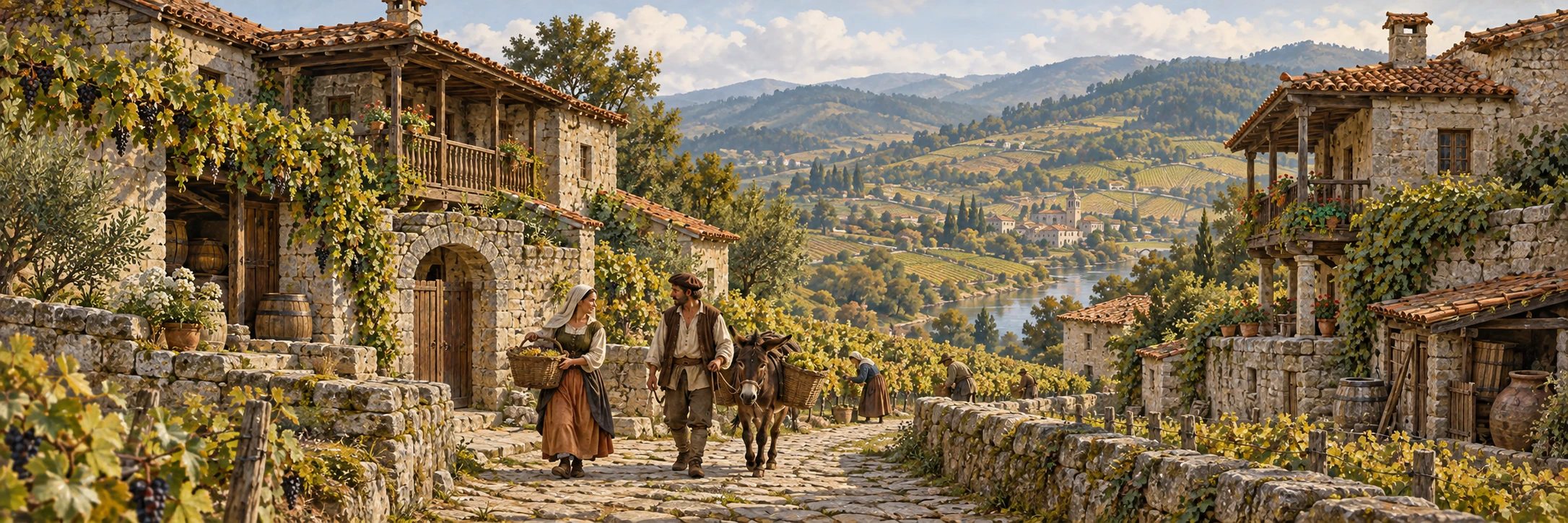
Houses among the vineyards
Manor houses stood within a landscape worked by growers and tenants. Follow Feijóo, Novoa, Araújo and Vilamarín through marriages, leases and vineyard income.


Historical illustration · An imagined scene
O Ribeiro · Avia · Miño · Arnoia
Start with the place. Follow the people.
The Avia, Miño and Arnoia valleys are the thread running through this guide. Read the regional history, explore the households and surnames, then open the tree to see the relationships supported by records.