Casa de Zúñiga-Biedma
Monterrey · Ourense · Galicia
Casa de Zúñiga-Biedma
Señores de Biedma · Vizcondes & Condes de Monterrey · Pertigueros Mayores de Santiago
“The ancient authority of the Counts of Lemos was replaced by a group of lineages — among them the Biedma, Stúñiga, Ulloa, and Acevedo — who rivalled each other for control of the spaces the Castros had once ruled.”— Pardo de Guevara y Valdés, Los señores de Galicia
The Arms
Two shields, one house
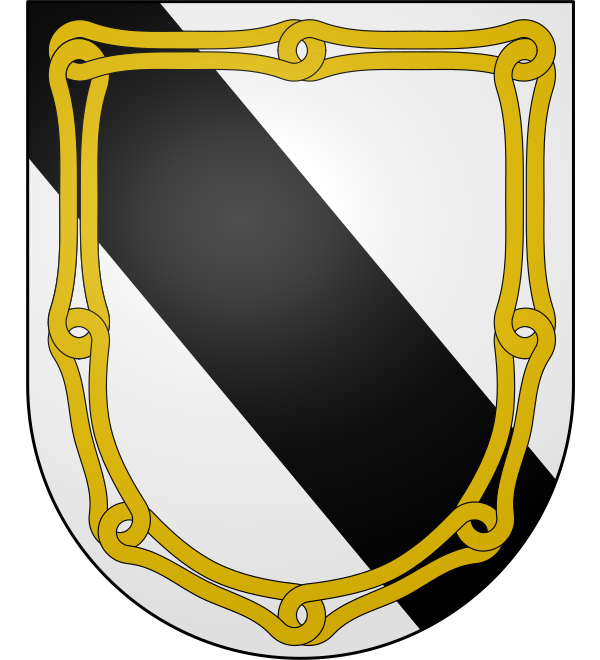
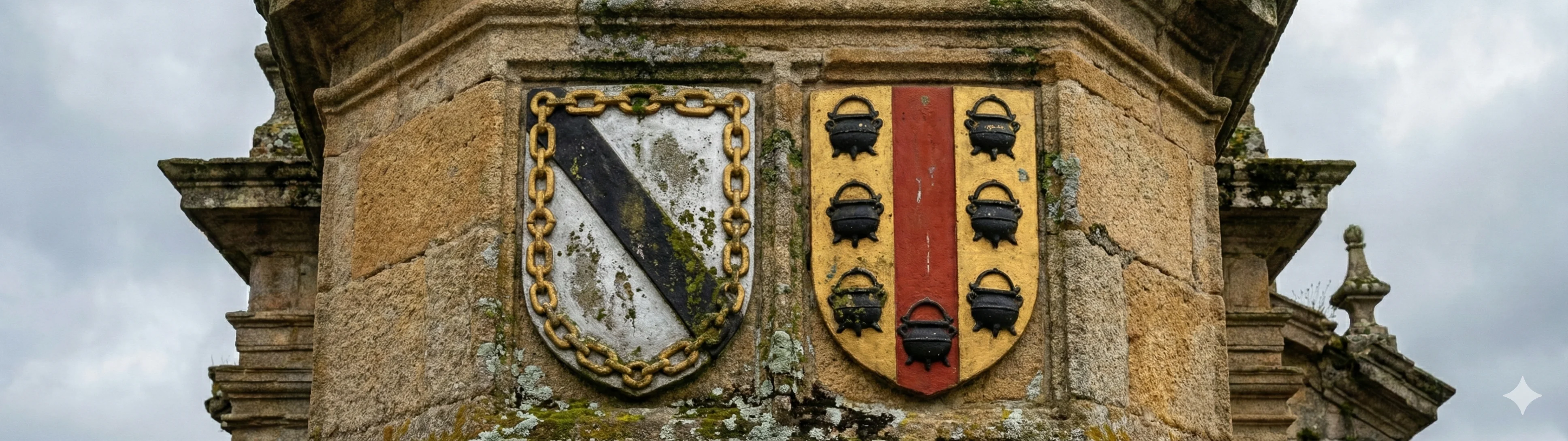
Zúñiga: Argent, a bend sable; in orle brochant over all, a chain of eight links or.
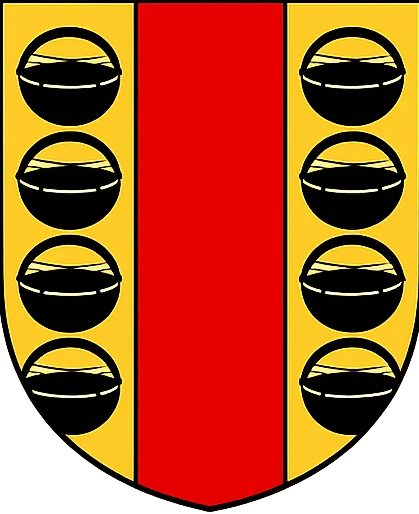
Biedma: Or, a pale gules between eight calderas sable, four to each side.
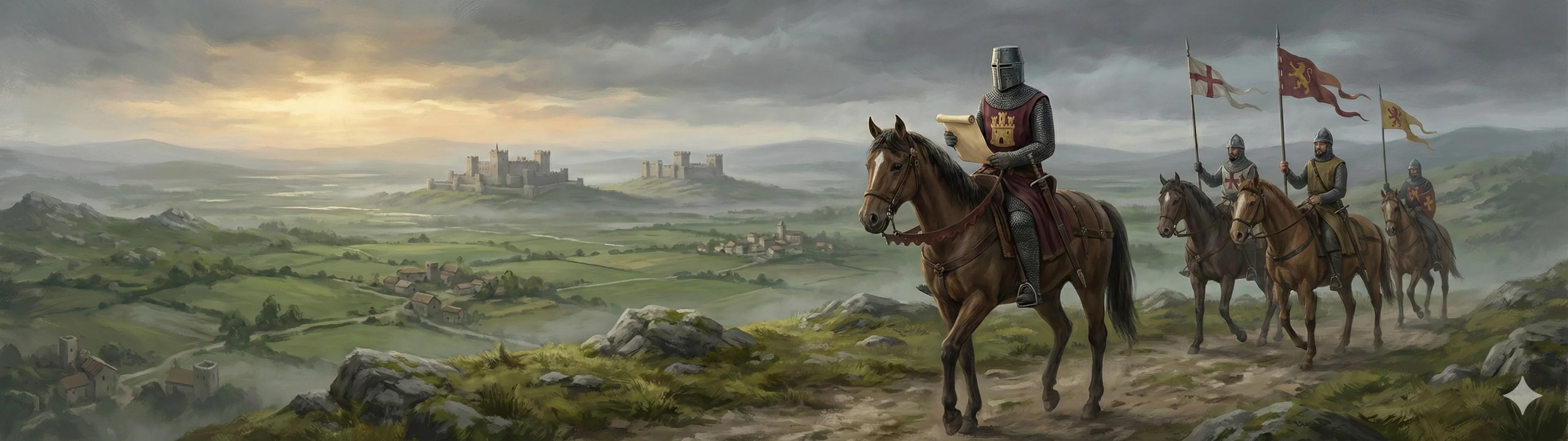
Frontier Men: From Castile to the Southern Marches of Galicia
The Biedma were a Castilian military lineage — not Galician by origin, but sent to Galicia as the crown's enforcers. At the end of the thirteenth century, Sancho IV despatched Fernán Ruiz de Biedma westward as merino mayor of the kingdom, with orders to hold the frontier territories of southern Ourense against Portuguese encroachment and to serve as ayo — tutor and guardian — to the Infante Felipe, the king's brother. The Biedma came not from the ancient kingdoms of the west but from the heartland of Castile, with Andalusian branches already established in Jaén from the time of Fernando III's reconquest. Their kinsman Rodrigo Iñiguez de Biedma had fought alongside the sainted king and founded a house in Jaén, facing the old Merced convent. The Biedma who arrived in Galicia brought a warrior's pedigree and a royal mandate.
Fernán Ruiz married Marina Páez de Sotomayor, daughter of the great troubadour-admiral Payo Gómez Charino, anchoring the family in the Galician aristocracy. His son Ruy Páez de Biedma became adelantado de Galicia and copero (cupbearer) to the Infante Pedro, holding the strategic castles of Allariz and Monterrey — the twin fortresses that commanded the valley of the Támega and the road to Portugal. When Alfonso XI granted Ruy Páez the lordship of Portela, Abavides, and the castle of A Pena in A Limia, the foundations of a new Galician power were laid in the broad plain south of Ourense, precisely the territory that would one day become the great state of Monterrey.
- Fernán Ruiz de Biedma (fl. c. 1291): merino mayor de Galicia under Sancho IV; ayo of the Infante Felipe; first of the Galician Biedma
- Marina Páez de Sotomayor: daughter of Payo Gómez Charino, troubadour, admiral, and lord of Rianxo
- Ruy Páez de Biedma (d. 1342): adelantado de Galicia, copero del Infante Pedro, holder of Allariz and Monterrey
- Portela, Abavides, Castillo da Pena: the first Biedma possessions in A Limia, granted by Alfonso XI (confirmed 1333)
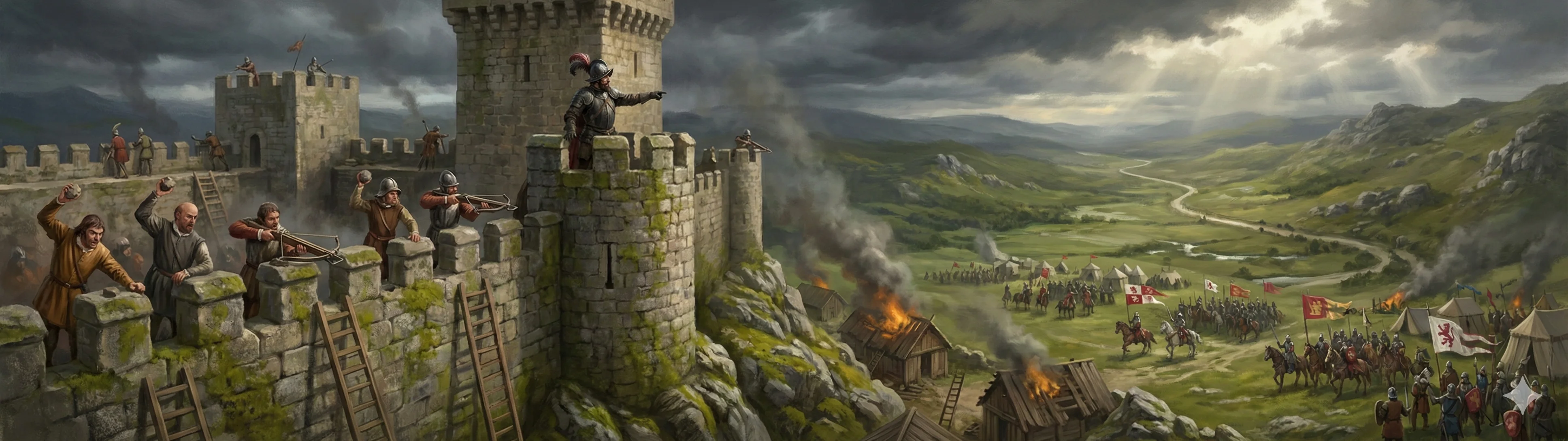
Salado, Montiel, and the Opposite Side of Loyalty
In 1340, the Biedma brothers rode south to fight alongside Alfonso XI at the Battle of Salado — the same battle where Pedro Fernández de Castro seized the Moroccan sultan's golden spurs. The two great houses of southern Galicia fought on the same field that day. It would be the last time they stood together.
Juan Rodríguez de Biedma, the third lord, inherited his father's offices and the tenancy of Allariz and Monterrey. He served Pedro I as copero mayor — chief cupbearer, a position of intimate trust. But when the king ordered the execution of Juan Rodríguez's son and heir, Rodrigo Yáñez de Biedma, for having entered what the crown called "royal disservice," the father's loyalty broke. The señor de Biedma switched allegiance to Enrique de Trastámara — and in doing so placed himself on the opposite side of history from Fernando de Castro, the great Petrist loyalist who would hold Galicia for three years after his king's murder.
The Biedma fought against the Castros. When Fernando de Castro held the fortresses of Galicia for Pedro I, Juan Rodríguez de Biedma defended the towers of the Támega, Limia, and Arnoya valleys for the Trastámara pretender. He was besieged in Allariz by Fernando de Castro and forced to flee to Monterrey, where he held out until the end. When Enrique murdered Pedro I with his own hands at Montiel on 23 March 1369, Juan Rodríguez de Biedma was present. He had chosen the winning side.
And he was rewarded for it. Between 1368 and 1369, Enrique II showered the Biedma lord with donations that would define the map of southern Galicia for centuries. In January 1368: Loveira, Entrimo, Araúxo, and Abelenda. In April 1369: Vilanova dos Infantes, Castrelo, and Espinoso. In July 1369: Xinzo de Limia, Gánade, Miño, and Barbantes. And in October, the great final grant, issued at Braganza: "Villa de Rey con todos sus alfoces, e Soto Bermud, con Val de Laza, y el castillo de Santibáñez de Barra, con las tierras de Todea e de Peñafiel."
The irony was bitter. Vilanova dos Infantes, Castrelo, and Espinoso — the three places granted to the Biedma in April 1369 — had previously belonged to the Castros. They had formed part of the dote brought to Pedro Fernández de Castro "el de la Guerra" by his wife Isabel Ponce de León. The lands the greatest Castro lord had held through marriage were stripped from his son's defeated cause and handed to the family that had helped destroy him.
- Battle of Salado (1340): the Biedma and the Castros fight side by side for the last time
- Juan Rodríguez de Biedma (3rd lord): copero mayor of Pedro I; switched to Enrique's camp after the execution of his heir
- Espinoso, Vilanova dos Infantes, Castrelo: granted to the Biedma by Enrique II, April 1369 — formerly Castro territories through the dote of Isabel Ponce de León
- Grant of Braganza (20 October 1369): the royal albalá that completed the Biedma señorío — "for now and forever"
- The señorío de Biedma: a frontier territory, homogeneous and well-cemented, designed to guard the Portuguese border and the southern access from the Meseta into Galicia
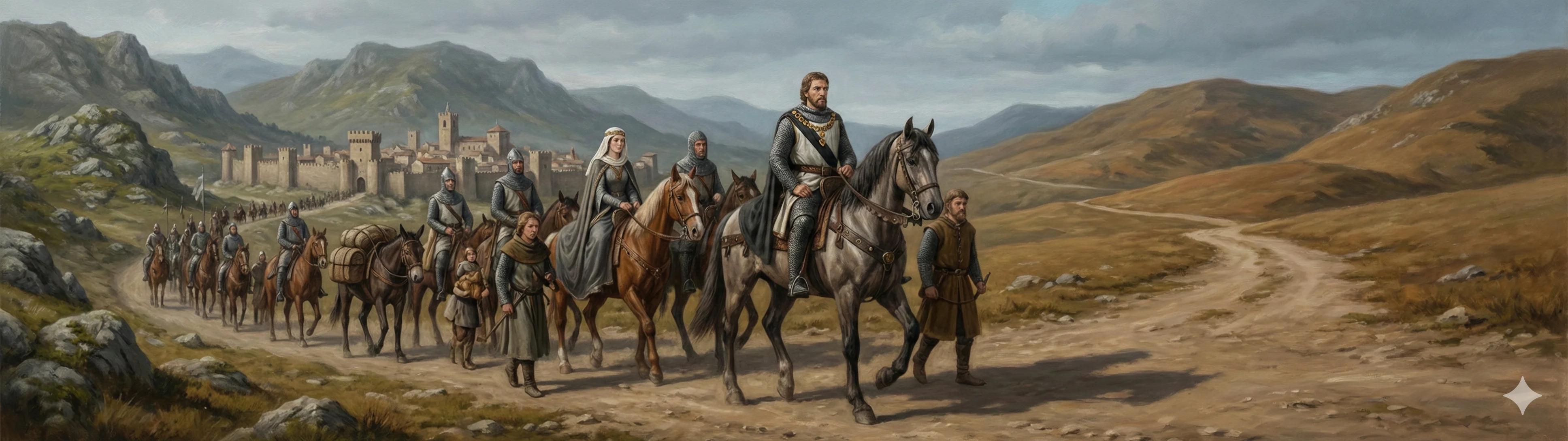
Kings of Pamplona: The Navarrese Blood of Monterrey
The Zúñiga were not Galician. They were not even Castilian. They were Navarrese — descendants, by tradition, of the first king of Pamplona, Iñigo Arista himself — and they took their name from the village of Zúñiga in the merindad of Estella. In 1274, when civil war erupted in Navarra over the tutelage of the child-queen Joan I and her French marriage, Iñigo Ortiz de Stúñiga, lord of Stúñiga and alférez mayor of the kingdom, refused to support the French party. He left Navarra with his entire family and entered the service of the Crown of Castile. The Zúñiga never returned.
In Castile they rose fast. By the early fifteenth century, the House of Zúñiga was one of the fifteen ricoshombres families of the kingdom — the highest rank of the Castilian nobility. Diego López de Stúñiga el Viejo served as Justicia Mayor of the realm. His namesake grandson, Diego López de Stúñiga el Mozo, was given the castle of Monterrey by Juan II of Castile in 1432. But it was through marriage, not royal grant, that the Zúñiga acquired their real Galician power.
In 1406, Diego López de Stúñiga el Mozo married Elvira de Biedma, only daughter and sole heiress of Juan Rodríguez de Biedma. The male line of the Biedma had failed. The great frontier señorío — all the valleys of the Támega, Limia, and Arnoya, all the fortresses from Monterrey to Xinzo de Limia — passed into Zúñiga hands. The minor branch of a Navarrese house became the inheritors of the Biedma state: a well-cemented, homogeneous territory in the south of Ourense, built to guard the border with Portugal. Monterrey was not originally part of the Biedma señorío, but the two would soon become one.
- Iñigo Arista (Eneko Aritza): first king of Pamplona, traditional ancestor of the Zúñiga line
- Village of Zúñiga: in the merindad of Estella, Navarra — the family's origin and namesake
- 1274: the Zúñiga leave Navarra for Castile during the civil war
- Diego López de Stúñiga el Mozo + Elvira de Biedma (1406): the marriage that fused the two houses — the extinction of the Biedma male line made the Zúñiga the heirs of the Galician frontier state
- Elvira de Biedma (d. before 1418): the last Biedma, through whom all the señoríos passed to the Zúñiga
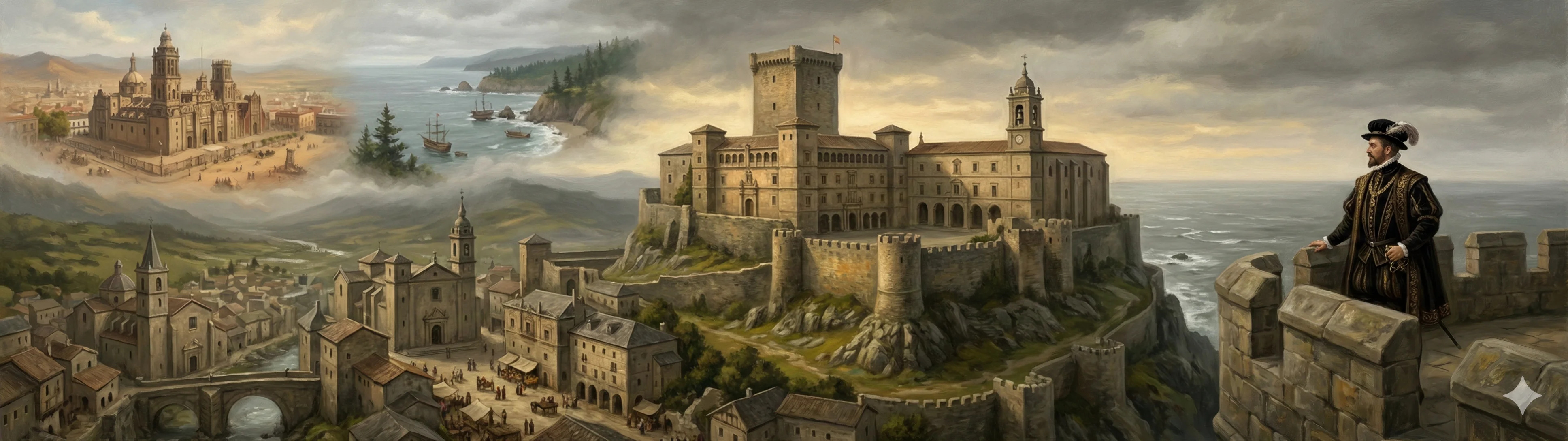
The County of Monterrey: From Galicia to the Americas
From the marriage of Diego and Elvira came two streams of descendants — and decades of litigation. Juan de Stúñiga, the firstborn, inherited the Biedma and Zúñiga mayorazgos and received the title of Vizconde de Monterrey from Juan II of Castile. But Diego's second marriage, to Constanza Barba de Monsalve, produced a rival line, and the two branches fought over the castle and the lordships for half a century. In 1474, the Reyes Católicos cut through the knot by granting the title of first Conde de Monterrey to Sancho Sánchez de Ulloa, who had married Teresa de Zúñiga y Biedma, the second vizcondesa. The Ulloa name entered the equation, but the underlying patrimony — the Biedma señorío, the Zúñiga titles, the castle overlooking the Támega valley — remained.
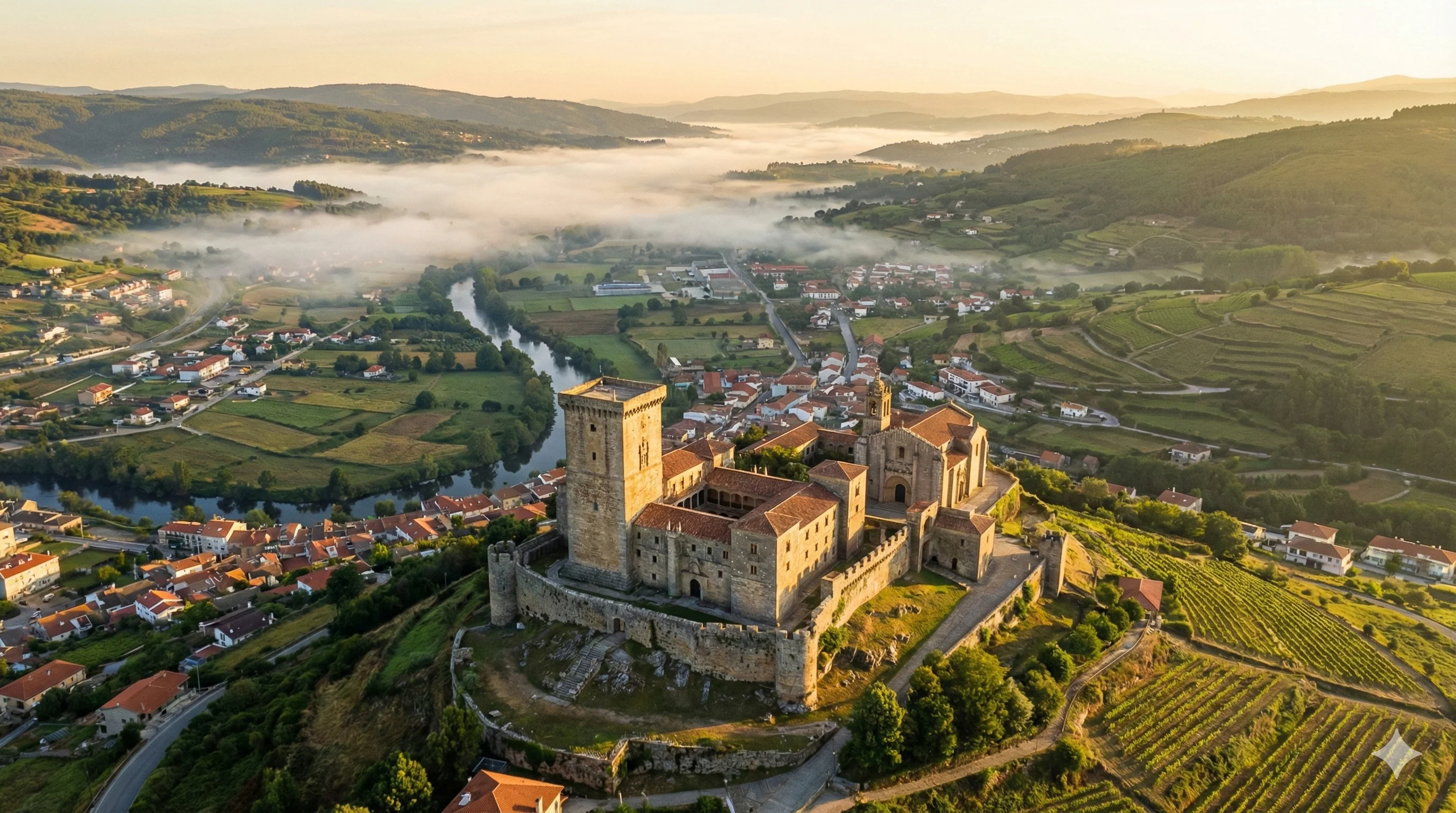
The county became one of the great noble states of early modern Galicia. The counts of Monterrey held the Pertiguería Mayor de Santiago — the same military governorship the Castros had wielded in the thirteenth century — and exercised jurisdictional authority over dozens of parishes across southern Ourense. They built the Palacio de los Condes within the walls of the castle, raised the Torre del Homenaje that still dominates the skyline above Verín, and founded a Jesuit college inside the fortress walls where their sons were educated.
But the most extraordinary Monterrey was Gaspar de Zúñiga y Acevedo, the fifth count, born inside the castle in 1560. Born señor de Biedma, Ulloa, and de la Casa de la Ribera, and pertiguero mayor de Santiago, Gaspar studied under the Jesuits his grandfather had installed in the fortress, then entered the service of Philip II. He led the Galician militia during the Portuguese campaign, defended La Coruña against the English corsair Francis Drake in 1589, and in 1595 was named Viceroy of New Spain. On 20 September 1596, Diego de Montemayor founded a city in the northern reaches of the viceroyalty and named it after his sovereign's representative: Nuestra Señora de Monterrey. Monterrey, Mexico — the great industrial capital of northern Mexico — carries the name of a castle in Ourense. When Sebastián Vizcaíno explored the coast of California in 1602, he named the finest bay he found in honour of the same viceroy: Monterey Bay. From Galicia to Mexico to California — the name of a Navarrese-Galician frontier family inscribed on the map of two continents.
Gaspar died in Lima in 1606, having served as viceroy of Peru after New Spain. His debts were so great that the Royal Audiencia had to pay for his funeral. His body was returned to Spain and buried in the Jesuit church inside the castle of Monterrey — the same fortress where he had been born.
- Vizcondado de Monterrey: granted by Juan II of Castile to Juan de Zúñiga y Biedma
- Condado de Monterrey (1474): granted to Sancho Sánchez de Ulloa, married to Teresa de Zúñiga y Biedma
- Pertiguería Mayor de Santiago: the military governorship of the lands of Compostela — held by the Castros in the 13th–14th century, inherited by the Monterrey counts
- Gaspar de Zúñiga y Acevedo (1560–1606): V conde de Monterrey, viceroy of New Spain (1595–1603) and Peru (1604–1606); the city of Monterrey, Mexico (founded 1596) and Monterey Bay, California (named 1602) bear his title
- Buried: Jesuit church, Castle of Monterrey, Ourense — returned from Lima, 1607
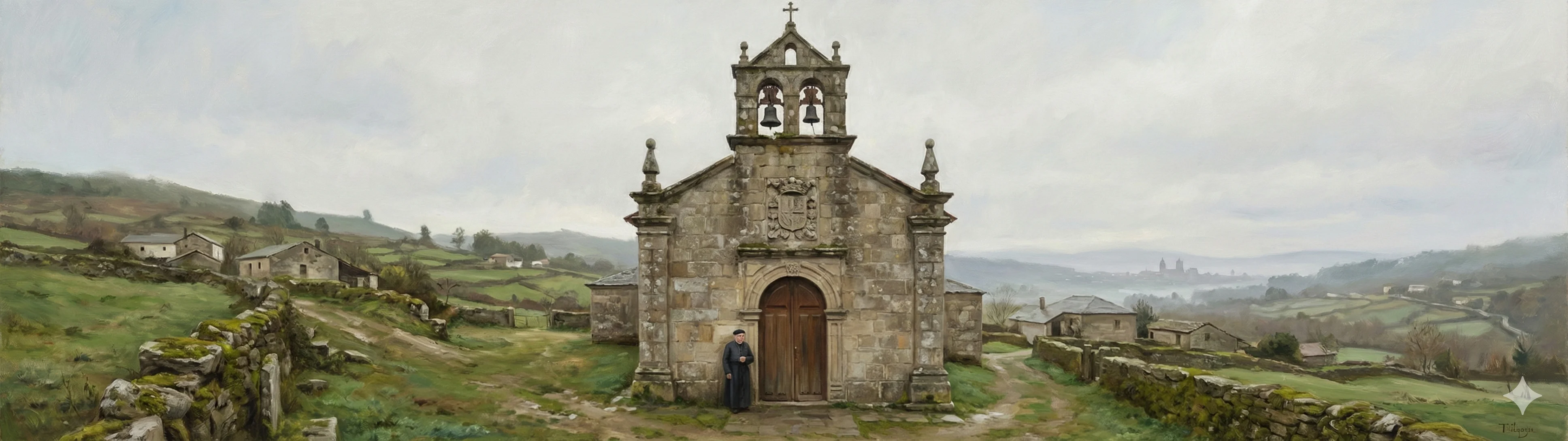
Espinoso: The Zúñiga-Biedma Arms on the Church in Cartelle
In the municipality of Cartelle, in the province of Ourense, in the parish of San Miguel de Espiñoso, stands a baroque church built in 1749 and enlarged in 1780. The facade — finished with a handsome espadaña and flanked by pilastras attributed to the workshop of the Maestro Serapio — bears, above the entrance door, the coat of arms of the Zúñigas and Biedmas. Seven centuries after the grant, the shield is still on the wall.
The parish name itself — Espinoso — is the name that appears in the royal donation of April 1369, when Enrique II granted Vilanova dos Infantes, Castrelo, and Espinoso to Juan Rodríguez de Biedma for his services in the civil war. These were the primicias del futuro condado de Monterrey — the first fruits of what would become the County of Monterrey. And Espinoso was no random grant. The place had previously been part of the Castro domain, brought into the family by the dote of Isabel Ponce de León, wife of Pedro Fernández de Castro "el de la Guerra." When Enrique gave Espinoso to the Biedma, he was handing them a piece of the world the Castros had built — and lost.
The people of Cartelle paid their taxes to the heirs of this grant. The jurisdictional authority of the Monterrey state extended over Espinoso and the surrounding parishes, and the church facade — built in the eighteenth century, long after the medieval wars that created the señorío — testifies that the connection endured. The coat of arms above the door is the physical proof: the people of this parish recognised the authority of the Zúñiga-Biedma lords, paid rents and pechos to their officials, and submitted to their justice through the alcalde mayor of Monterrey.
The location matters. Cartelle sits in the Terra de Celanova, between the monastery of Celanova to the south and the Miño valley to the north — within sight of Ribadavia. The triangle appears again. Ribadavia (Sarmiento), Cartelle (Zúñiga-Biedma at Espinoso, Templars at Santa María), Castrelo de Miño (the ancient monastery where kings were buried). Three families, three parishes, one valley. The Biedma filled the space the Castros left behind; the Zúñiga inherited what the Biedma built; and the arms on the church wall in Espinoso are the last visible trace of a jurisdictional system that ran from the civil war of 1369 to the liberal abolition of señoríos in the nineteenth century.
- San Miguel de Espiñoso: parish in the municipality of Cartelle, province of Ourense — the church facade bears the Zúñiga-Biedma coat of arms
- Church of San Miguel de Espiñoso: baroque, built 1749, enlarged 1780; facade attributed to the Maestro Serapio workshop; Zúñiga-Biedma arms above the entrance
- Espinoso in the 1369 grant: one of the three places (with Vilanova dos Infantes and Castrelo) granted by Enrique II to Juan Rodríguez de Biedma — formerly Castro territory
- Espinosa / Espinoso: the place name — from the Latin *spinosus*, thorny — is the same root as the surname Espinosa. The convergence of the toponym with Cyril's family line is worth noting
- Jurisdictional reach in the 18th century: confirmed by Pedro González de Ulloa's *Descripción de los Estados de la Casa de Monterrey en Galicia* (1777) — the definitive survey of the Monterrey state under the Ancien Régime
- The Ribadavia–Cartelle–Castrelo triangle: Sarmiento castle, Zúñiga-Biedma jurisdiction (Espinoso), and the ancient royal monastery — three powers, three nodes, one valley system
A Black Band, a Gold Chain, and Eight Calderas
The Casa de Zúñiga-Biedma bore two sets of arms, each with its own story. The Zúñiga shield — argent, a bend sable, brochant over all a chain of eight links or in orle — was among the most recognisable armorial devices in Spain. The Biedma shield — or, a pale gules between eight calderas sable, four to each side — signalled the military heritage of a frontier house charged with defending the southern approaches to Galicia.
The Zúñiga arms changed twice. The original device was a golden band on red. After the Battle of Las Navas de Tolosa in 1212, when Navarrese knights broke through the chain-linked human wall of the Almohad caliph's Black Guard, the Zúñiga added a gold chain of eight links in border — the same device that entered the arms of the Kingdom of Navarra itself. In 1270, Diego López de Stúñiga changed the colours again, to silver, black, and gold, in mourning for the deaths of Saint Louis IX of France and Theobald II of Navarra during the Eighth Crusade. The arms remained unchanged from that date. The black band across a silver field, enclosed by a chain of gold, was carried from Navarra to Castile, from Castile to Galicia, from Galicia to the Americas.
The Biedma calderas — the heraldic cooking pots that denoted the right to maintain armed retainers and feed a war host — marked the family as ricoshombres, magnates of the first rank. The two shields united in 1406. When they appear together on the facade of a church in Cartelle, in the province of Ourense, they still speak across seven centuries.
- Zúñiga arms: Argent, a bend sable; in orle brochant over all, a chain of eight links or
- Biedma arms: Or, a pale gules between eight calderas sable, four to each side. Variant: Argent, a pale gules between eight calderas sable
- Calderas (heraldic cauldrons): the charge of a ricohombre — one who could raise, arm, and feed men for war
- Las Navas de Tolosa (1212): the origin of the gold chain in the Zúñiga border — and in the arms of Navarra
Key Figures
Warriors, heirs, bishops, and viceroys of the Casa de Zúñiga-Biedma
The first Biedma in Galicia. Sent by Sancho IV to hold the southern frontier. Married Marina Páez de Sotomayor, daughter of the troubadour-admiral Payo Gómez Charino. Founded the Galician line.
Son of Fernán Ruiz. Held the castles of Allariz and Monterrey. Fought at the Battle of Salado (1340). Received the lordship of Portela and Abavides from Alfonso XI. The builder of the Biedma territorial base in A Limia.
The pivotal figure. Served Pedro I as chief cupbearer, then switched to Enrique de Trastámara after the execution of his heir. Defended Monterrey against Fernando de Castro. Present at Montiel. Rewarded with the lands that became the future County of Monterrey.
Brother of Juan Rodríguez. Rose to the episcopate — first Mondoñedo, then Ourense. The Biedma placed men in the Church as well as in the fortress.
Only daughter and sole heiress of Juan Rodríguez de Biedma. Her marriage to Diego López de Stúñiga el Mozo in 1406 united the two houses and transmitted the entire Biedma señorío to the Zúñiga.
The Navarrese nobleman who married into Galicia. Received the castle of Monterrey from Juan II. His two marriages produced rival branches that fought for half a century.
Married Teresa de Zúñiga y Biedma, the second vizcondesa. Received the title of first Count of Monterrey from Enrique IV (1474). Built the Torre del Homenaje that still dominates the castle.
Born in the castle of Monterrey. Defended La Coruña against Drake. Viceroy of New Spain (1595–1603) and Peru (1604–1606). The cities of Monterrey, Mexico and Monterey Bay, California bear his title. Died in Lima. Buried back in the castle where he was born.
Theologian at Salamanca, bishop of Segovia, archbishop of Compostela and then Seville, cardinal. The Zúñiga placed men on the throne of Compostela as the Biedma had placed them in Mondoñedo and Ourense.