French Heritage
Knights, monks, and pilgrims from France
French Heritage
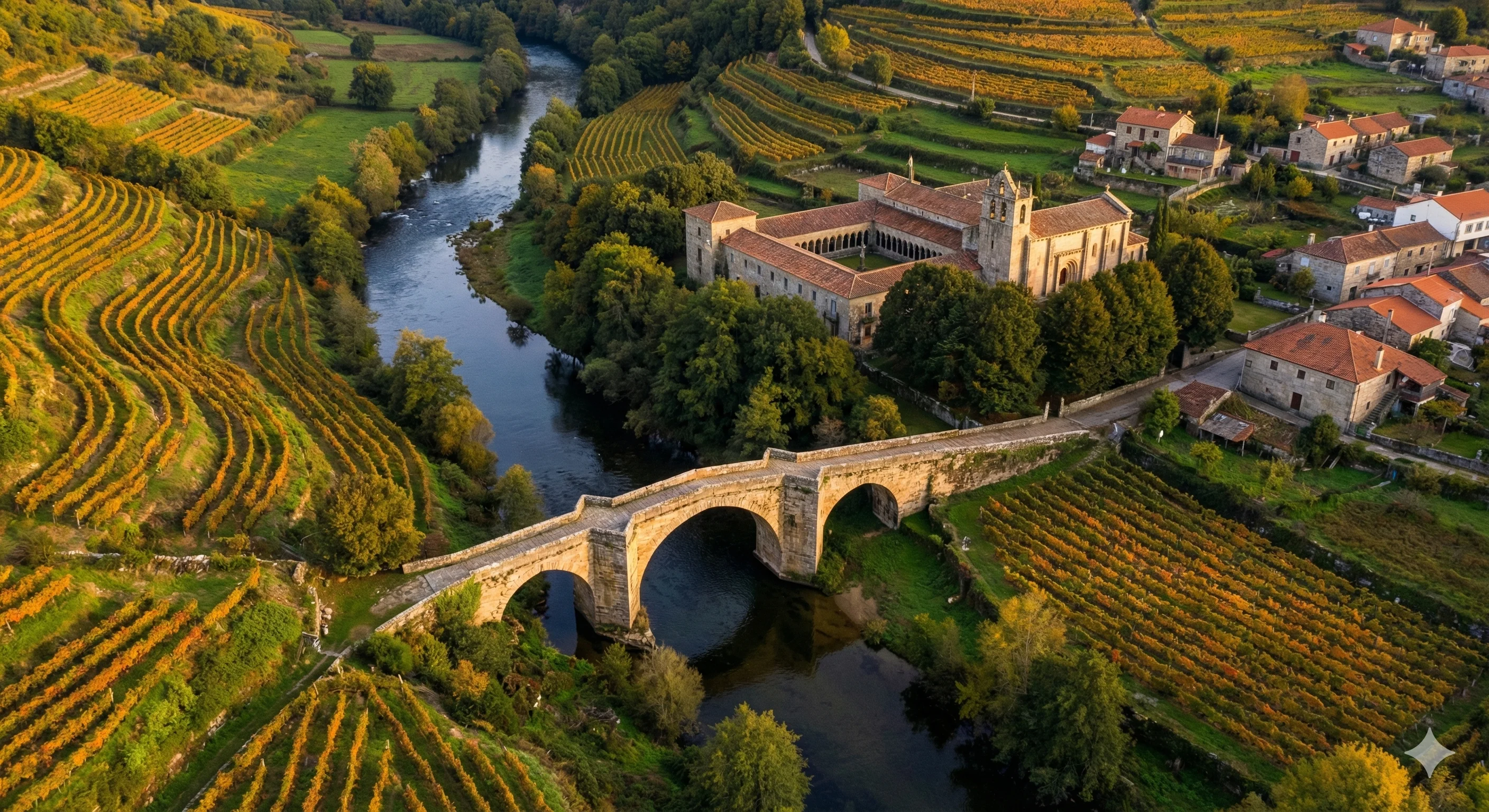
In the 11th century, Burgundian knights rode south to govern Galicia, Cluniac monks reformed its churches, Cistercian brothers planted the vineyards of the Ribeiro, and French settlers built the commercial towns along the Camino de Santiago. The wine we drink, the churches we see, the roads we walk — the French left their mark on every valley from Castrelo de Miño to Ribadavia.
“The English discovered the wines of Ribadavia and drank so freely that when morning came, they could scarcely stand in their ranks.”— Jean Froissart, Chronicles, c. 1386
Knights from Burgundy, Kings of Galicia
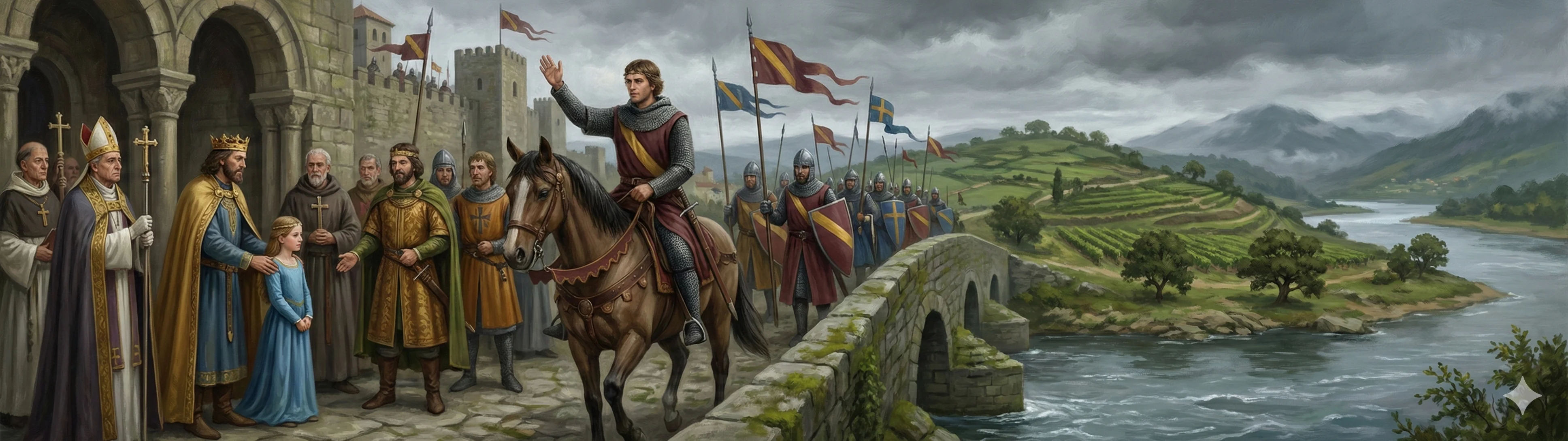
In the 1080s, French knights rode south across the Pyrenees to fight in the Reconquista. Among them was Raymond of Burgundy, a younger son of Count William I of Burgundy, who arrived around 1086 with the army of Duke Odo I. King Alfonso VI of León and Castile — whose wife Constance of Burgundy was niece to Abbot Hugh of Cluny — rewarded Raymond with the hand of his daughter Urraca and governance of the entire Kingdom of Galicia. From approximately 1090 until his death in 1107, a French Burgundian nobleman ruled the land where Castrelo de Miño, Cartelle, and Ribadavia stand.
Raymond's cousin Henry of Burgundy received the County of Portugal from Alfonso VI around 1095. Henry's son, Afonso Henriques, would become the first King of Portugal — meaning the founding dynasty of Portugal was of French Burgundian origin, born directly from the governance of Galicia. Raymond's own brother, Guido of Burgundy, became Pope Callixtus II in 1119, elevating Santiago de Compostela to an archdiocese and making the Jubilee Year pilgrimage official. In a single generation, the House of Burgundy reshaped the politics, religion, and destiny of Galicia and the entire Iberian Peninsula.
- Raymond of Burgundy governed Galicia as Count from c. 1090 to 1107 — granting charters and supporting monastic foundations
- Henry of Burgundy received the County of Portugal c. 1095 — his son founded the Kingdom of Portugal
- Alfonso VI married Constance of Burgundy, niece of Abbot Hugh of Cluny, opening the door to French monastic and political influence
- Raymond's brother became Pope Callixtus II (1119–1124), who elevated Santiago de Compostela to an archdiocese
- Raymond's son Alfonso VII became Emperor of León and Castile — continuing the Burgundian lineage on the throne
Cluny: The Power Behind the Throne
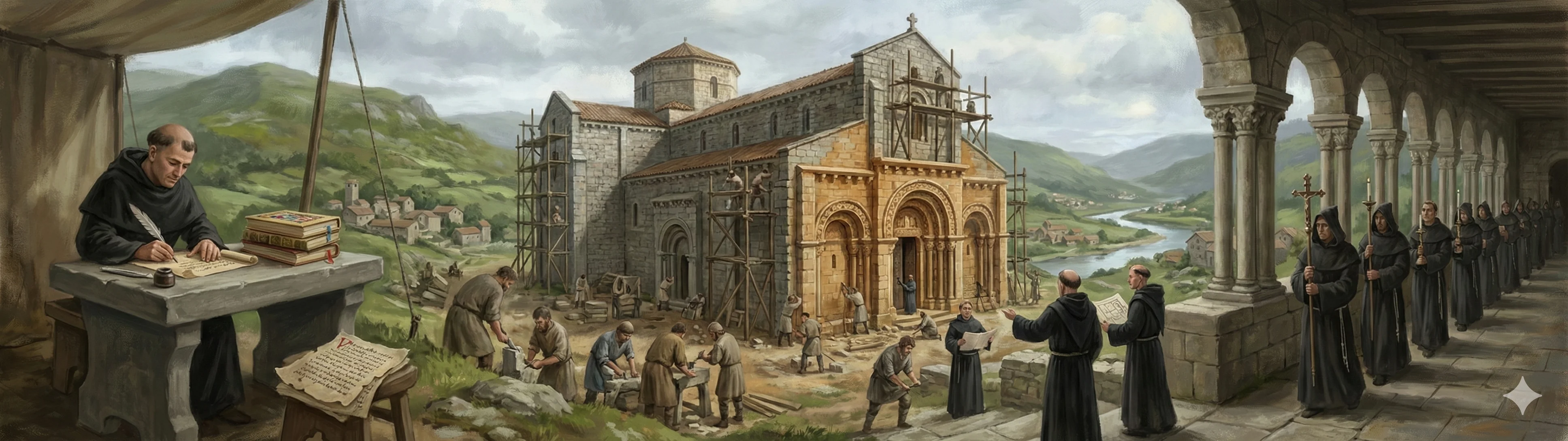
The Abbey of Cluny in Burgundy was the most powerful monastic institution in medieval Europe, and its influence on Galicia was profound. Through the marriage of Constance of Burgundy to Alfonso VI in 1079, the Cluniac order gained direct access to the highest levels of Iberian power. The reforms that followed transformed Galician society: the ancient Mozarabic rite was replaced by the Roman liturgy, the Visigothic script gave way to Carolingian minuscule, and Romanesque architecture — the building language of Cluny — began to reshape the churches and monasteries of the Ourense countryside.
Cluny's first permanent priory in Galicia was San Vicente de Pombeiro in the diocese of Lugo, donated by Queen Urraca — Raymond of Burgundy's widow — in 1108. While Cluny's direct monastic footprint in Galicia was smaller than in Castile, its indirect influence was immense: the order promoted the Santiago pilgrimage across Europe, provided infrastructure along the route, and its network of monasteries served as intellectual and cultural bridges between France and the Atlantic northwest of Iberia.
- Abbey of Cluny was the most powerful monastic house in medieval Europe — at its height controlling over 1,000 priories
- The Mozarabic rite was replaced by the Roman liturgy across Galicia under Cluniac influence
- Visigothic script gave way to Carolingian minuscule — a French innovation that standardised writing across Western Europe
- San Vicente de Pombeiro (1108) became Cluny's first priory in Galicia, donated by Queen Urraca
- Cluny actively promoted the Santiago pilgrimage through its pan-European monastic network
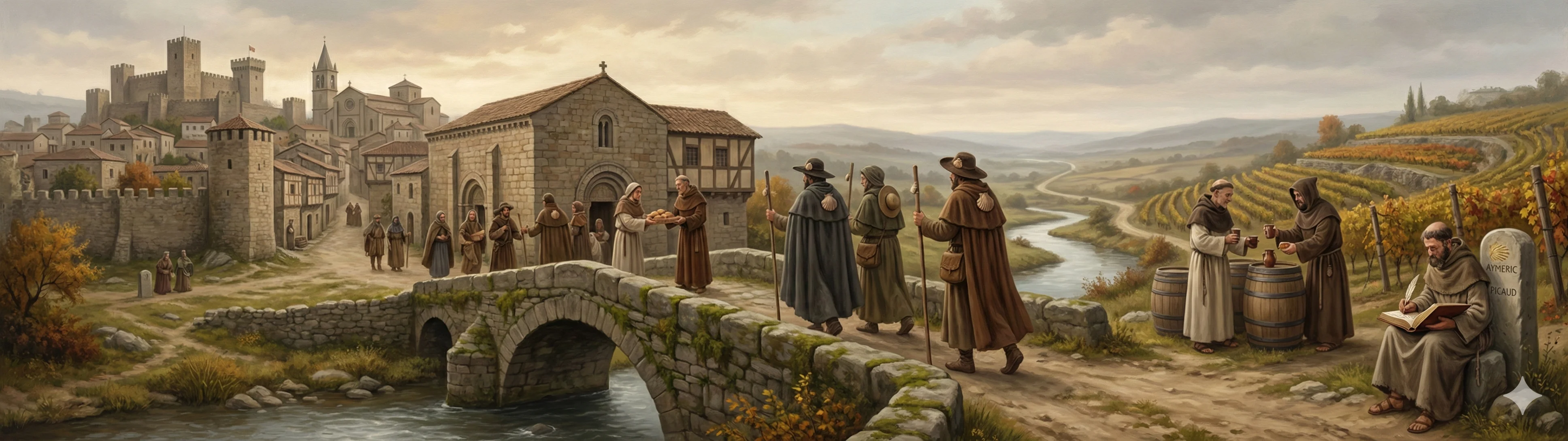
The Camino de Santiago & the French Way
The Camino de Santiago — the great pilgrimage to the tomb of the Apostle Saint James — was above all a French enterprise. The Camino Francés (French Way), entering Spain at Roncesvalles and Somport, was the main artery. But the Vía de la Plata, following the ancient Roman road from the south, passed directly through the Ribeiro — through Ourense, Ribadavia, and onward to Santiago — carrying pilgrims through the heart of the wine country. The pilgrimage brought continental innovations to Galicia: Romanesque art, new agricultural techniques, and urban models that transformed the landscape.
The most important literary monument of this French connection is the Codex Calixtinus, compiled around 1138–1145 and nominally attributed to Pope Callixtus II — Raymond of Burgundy's brother. Scholars believe it was primarily arranged by the French cleric Aymeric Picaud, who journeyed to Santiago and produced what is essentially Europe's first travel guide. Book V describes the French routes in extraordinary detail, recording the customs, rivers, and peoples encountered along the way. The Rua do Franco in Santiago de Compostela — the old town's most famous street — is named for the French merchants who settled there to serve the pilgrims.
- The Camino Francés (French Way) was the principal pilgrimage route, carrying the largest number of pilgrims from France to Santiago
- The Vía de la Plata passed through Ourense and Ribadavia, bringing pilgrims through the Ribeiro wine country
- The Codex Calixtinus (c. 1138–1145) — Europe's first travel guide — was compiled by French cleric Aymeric Picaud
- The Rua do Franco in Santiago is named for the French merchants who settled along the pilgrimage route
- The pilgrimage brought Romanesque architecture, new urban models, and continental trade to Galicia
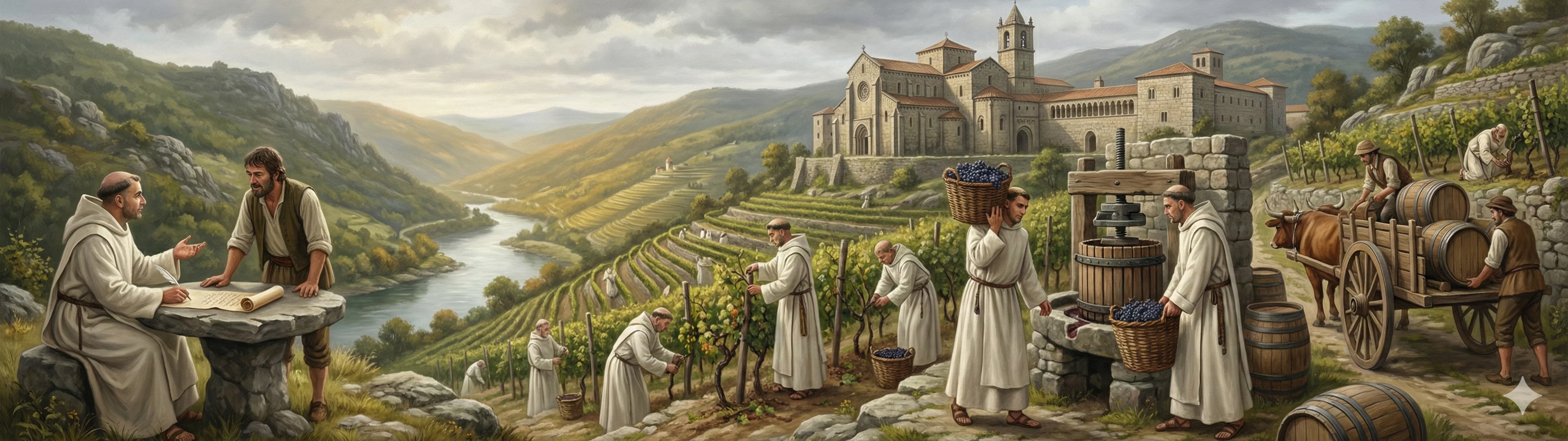
Cistercians: From Burgundy to the Ribeiro
The Cistercian Order, founded in 1098 at Cîteaux in Burgundy — the heartland of French viticulture — brought a revolution to the Ribeiro. Under Saint Bernard of Clairvaux, the order expanded explosively across Europe, and by his death in 1153 there were over 300 Cistercian houses. The same monks credited with developing the great vineyards of Burgundy arrived in Galicia and applied their disciplined approach to the land. The Monastery of Santa María de Oseira in Ourense province became the first Cistercian foundation in Galicia in 1141, directly affiliated to Clairvaux — monks sent by Bernard himself.
The Cistercians worked the three river valleys of the Ribeiro — the Miño, Avia, and Arnoia — and gradually expanded viticulture outward. They stimulated cultivation through specific regional contracts called foros, agreements with local landowners who planted vineyards and returned a portion of the wine to the monasteries. The Monastery of Santa María de Melón, another key Cistercian foundation in the Ourense province, joined Oseira in driving this viticultural expansion. By 1133, Ribeiro wine commanded the highest price among foods sold in Santiago de Compostela — a testament to the quality the monks achieved.
- The Cistercian Order was founded in 1098 at Cîteaux, Burgundy — the same region that produces Chardonnay and Pinot Noir today
- Oseira (1141) was the first Cistercian monastery in Galicia, directly affiliated to Clairvaux
- Santa María de Melón was a key Cistercian house in Ourense, driving Ribeiro vineyard expansion
- Cistercian monks stimulated viticulture through foro contracts with local landowners
- By 1133, Ribeiro wine commanded the highest price in the Santiago de Compostela market
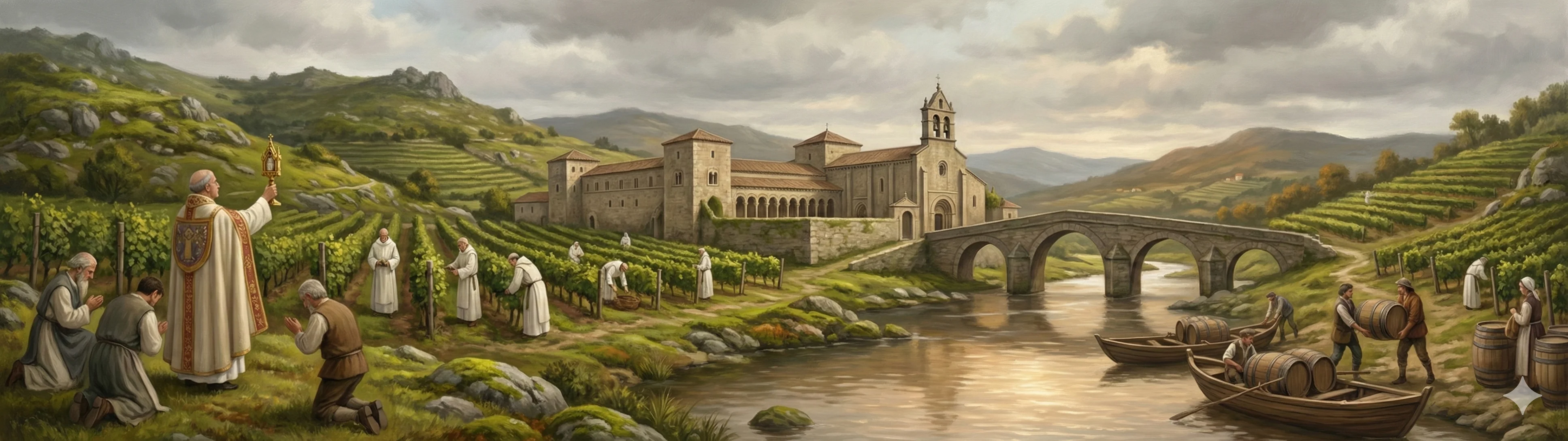
San Clodio: Where Monks Made Wine
In the heart of the Ribeiro wine region, on the banks of the Avia river near Ribadavia, stands the Monastery of San Clodio in Leiro. Founded as a Benedictine community in the 10th century, San Clodio joined the Cistercian Order around 1225, affiliating with the Monastery of Melón. From that moment, the monastery became the principal religious, intellectual, and agricultural centre of the Ribeiro. Its monks recovered native grape varieties, expanded vineyard cultivation along the Avia valley, and perfected winemaking techniques inherited from the Burgundian Cistercian tradition.
Wine production gave San Clodio times of great prosperity, peaking between the 12th and 13th centuries. The monastery's abbot Pelagio González documented "the great work for the vineyard reintroduction" and "the excellent quality of the wines that reached the rest of Europe through local merchants." The wines of the Ribeiro were exported to England, France, the Low Countries, Italy, and Germany. The monastery housed a Holy Relic — said to be a splinter of the True Cross — that was venerated specifically to protect the vineyards from hailstorms. Today the monastery is a national monument, its medieval bridge over the Avia a symbol of the deep bond between French monasticism and Galician wine.
- San Clodio in Leiro is considered one of the cradles of Ribeiro wine
- Originally Benedictine (c. 928), the monastery joined the Cistercian Order c. 1225
- Peak prosperity in the 12th–13th centuries, driven by wine production and export
- Ribeiro wine was exported to England, France, the Low Countries, Italy, and Germany
- The monastery's Holy Relic was venerated to protect vine harvests from hailstorms
- Declared a National Historic-Artistic Monument in 1931, together with its medieval bridge
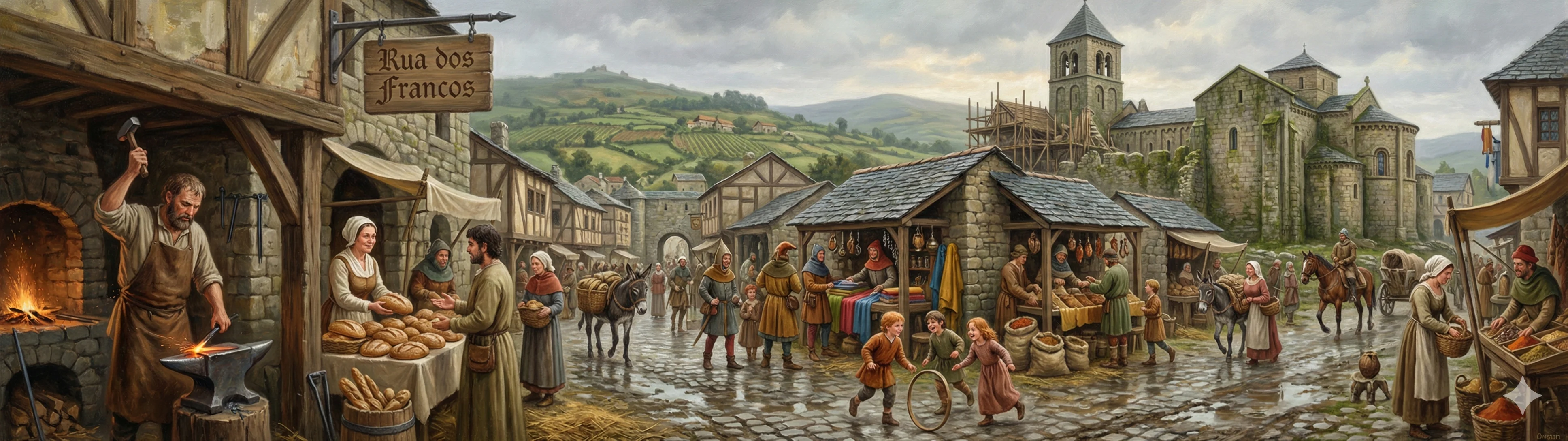
The Francos: French Names on Galician Soil
Beyond the knights and monks, a broader wave of French settlers — known as francos — arrived in Galicia during the 11th to 13th centuries. The term franco originally meant "Frank" but in medieval Iberian usage came to mean "free foreigner" — settlers from beyond the Pyrenees, mainly from France, but also from Germany, Flanders, and the Low Countries. They were military adventurers, clergy, artisans, and merchants who received exclusive settlement permits from Christian monarchs, attracted by the opportunities created by the Reconquista and the pilgrimage trade.
The francos established themselves in commercial suburbs called burgos — essentially a French importation — that grew outside the walls of castles and monasteries. The first documented franco in Galicia was Bretenaldo, recorded in Santiago de Compostela around 920. By the 12th century, entire streets and neighbourhoods bore their name: the Rua do Franco in Santiago, Rua dos Francos in Teo, and settlements called Francos in Maceda (Ourense) and Baralla (Lugo). They brought French personal names — Aimeric, Guillem, Ramo, Raol — that persisted for two or three generations before blending into the Galician population. The burgo model of urban development transformed the social structure of Galician towns, diversifying the economy and building the trade networks through which Ribeiro wine would travel to the ports of Europe.
- Francos were "free foreigners" mainly from France, settling in Galicia from the 11th to 13th centuries
- Bretenaldo (c. 920) was the first documented franco in Santiago de Compostela — likely a pilgrim who stayed
- The burgo — a commercial suburb outside castle or monastery walls — was described as "a French importation"
- Rua do Franco in Santiago de Compostela is named for the French merchants who settled there
- Place names like Francos (Maceda, Ourense) and Vilafranca survive as evidence of French settlement across Galicia
What the French Left Behind
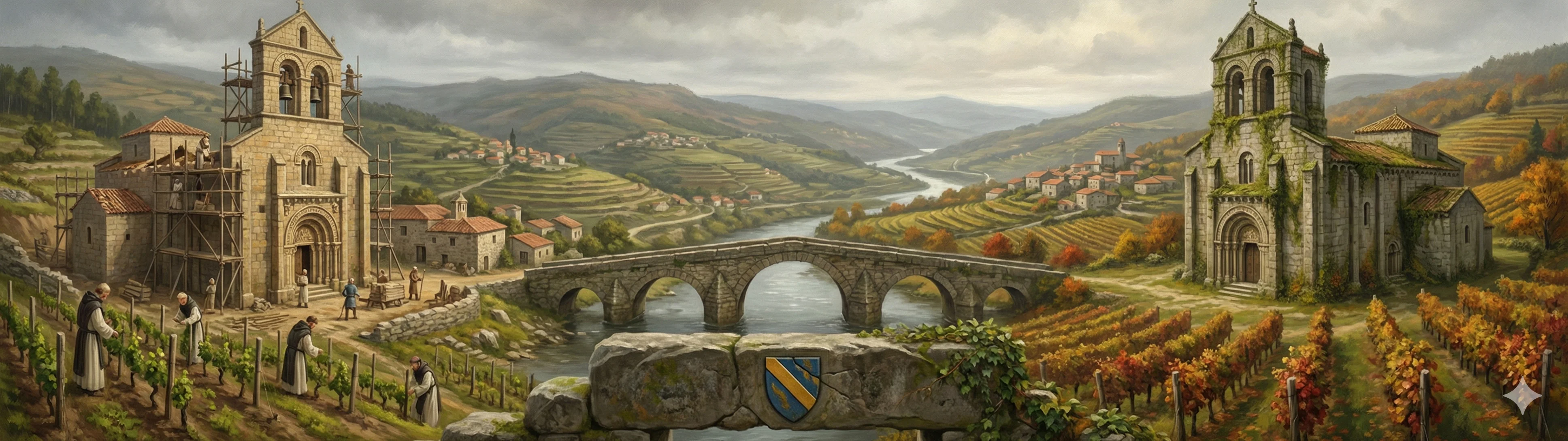
The French chapter in Galician history lasted barely two centuries, but its imprint endures in the stone, the vine, and the very structure of daily life. The Romanesque architecture that defines Galicia's rural churches — including the 12th-century apse of Santa María in Castrelo de Miño — arrived through French channels. The Cistercian monasteries of Oseira, Melón, and San Clodio transformed the Ribeiro from scattered vineyards into one of Europe's most celebrated wine regions, whose wines reached English, Flemish, and German tables. The liturgy shifted from Mozarabic to Roman; the script from Visigothic to Carolingian; the urban pattern from walled castro to open burgo.
Most enduringly, the Burgundian dynasty that began with Raymond of Burgundy ruling Galicia produced the royal houses of León-Castile and Portugal. The founding king of Portugal was the grandson of a Burgundian knight who came to fight in the Reconquista and stayed to govern Galicia. For the families of Castrelo de Miño, Cartelle, and Ribadavia, the French legacy is not a distant abstraction — it is in the wine they press, the churches where they worship, the roads they walk, and the parish boundaries that have scarcely changed since the monks of Cluny first looked upon the green hills of the Ribeiro.
- The 12th-century Romanesque apse of Santa María in Castrelo de Miño reflects French-influenced architectural styles
- The Cistercian viticultural revolution made the Ribeiro one of Europe's most celebrated medieval wine regions
- The Burgundian dynasty produced the royal houses of León-Castile and Portugal
- The burgo model of urban development reshaped Galician towns from walled settlements to commercial centres
- French liturgical, scribal, and architectural innovations became the permanent foundations of Galician culture
Heritage Sites
Monasteries, pilgrim routes, and architectural landmarks preserving the French heritage of Galicia and the Ribeiro.
Key Dates
“O viño do Ribeiro non ten comparación: bébese coa garganta, quéntache o corazón.”— The wine of Ribeiro has no equal: it drinks through the throat and warms the heart.