Casa de Soutomaior
Pedro Madruga · Count of Caminha · Lord of Soutomaior
“madrugaba mucho quando haçía sus cabalgadas”— Vasco de Aponte on the name “Madruga”, c. 1530
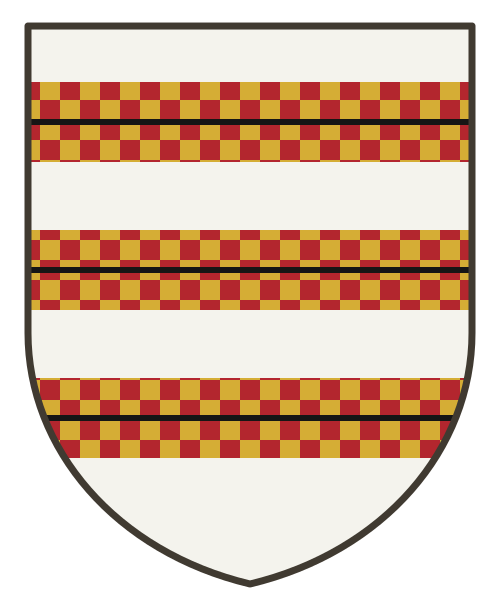
The Lineage Arms
On silver, three gold-and-red chequered fesses of four rows, each crossed by a narrow black filet. This is the historic lineage shield; the modern municipal arms are different.
A House Named for Its Stronghold
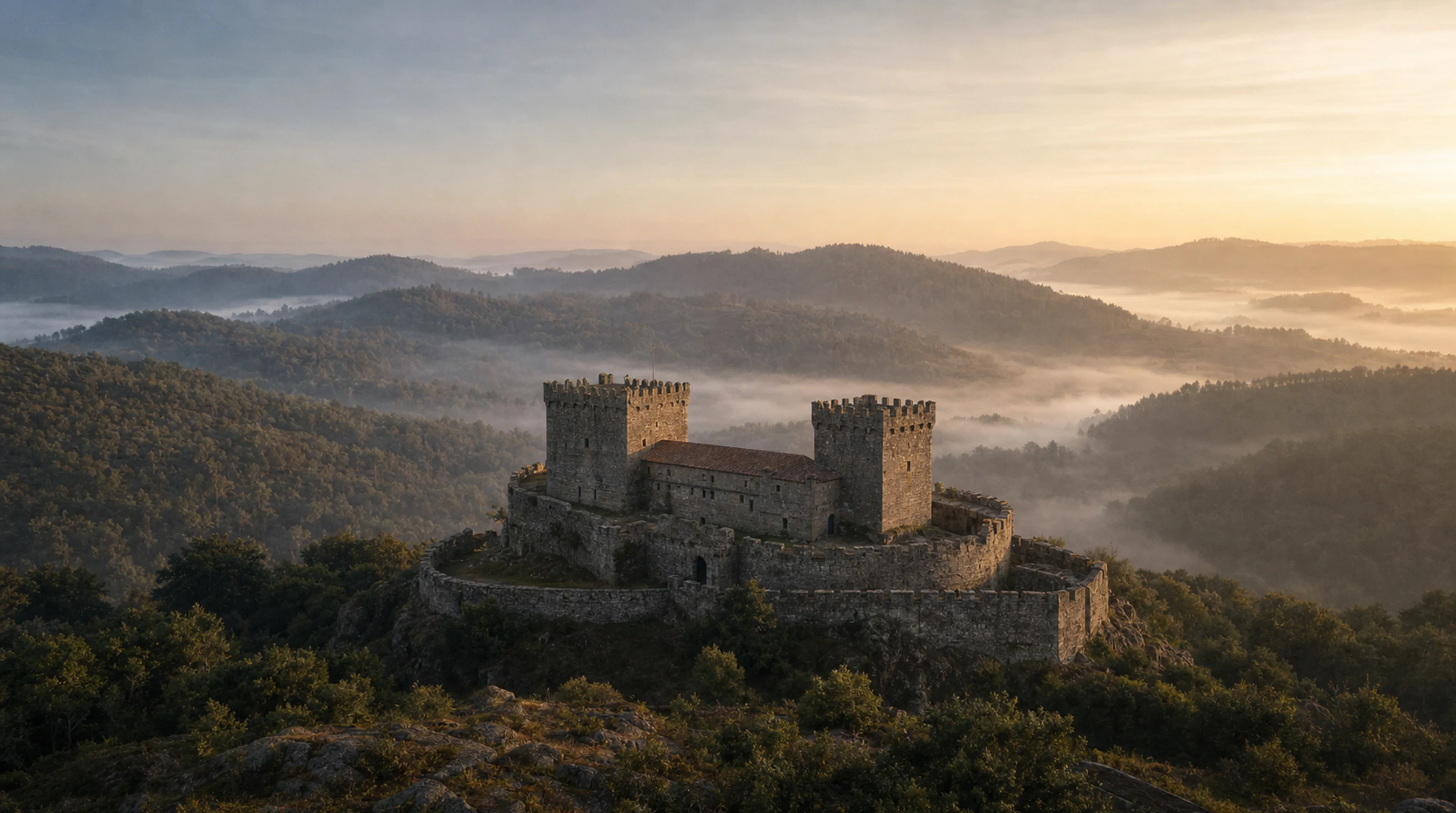
The House of Soutomaior took its name from the place and fortress at the centre of its lordship in southern Galicia. From this wooded stronghold, the lineage built influence across the lands between the Verdugo valley, Tui, and Baiona. Its history was never confined to one castle: the family moved through the overlapping jurisdictions of noble houses, bishops, towns, and the frontier with Portugal.
By the fifteenth century the head of the house was Fernán Yáñez de Soutomaior. His illegitimate son Pedro Álvarez was initially directed toward an ecclesiastical career and became a canon of Tui. That course changed when Pedro's brother Álvar died fighting the Irmandiños. Pedro inherited the family lordship and transformed a threatened regional house into one of the most formidable powers in late-medieval Galicia.
- Soutomaior is the Galician form of the name; Sotomayor is its common Castilian form
- The fortress of Soutomaior was the political and military centre of the lineage
- Pedro was an illegitimate son of Fernán Yáñez and was prepared for service in the Church
- The succession passed to Pedro after the death of his brother Álvar during the Irmandiño conflict
The Canon Who Became a Warlord
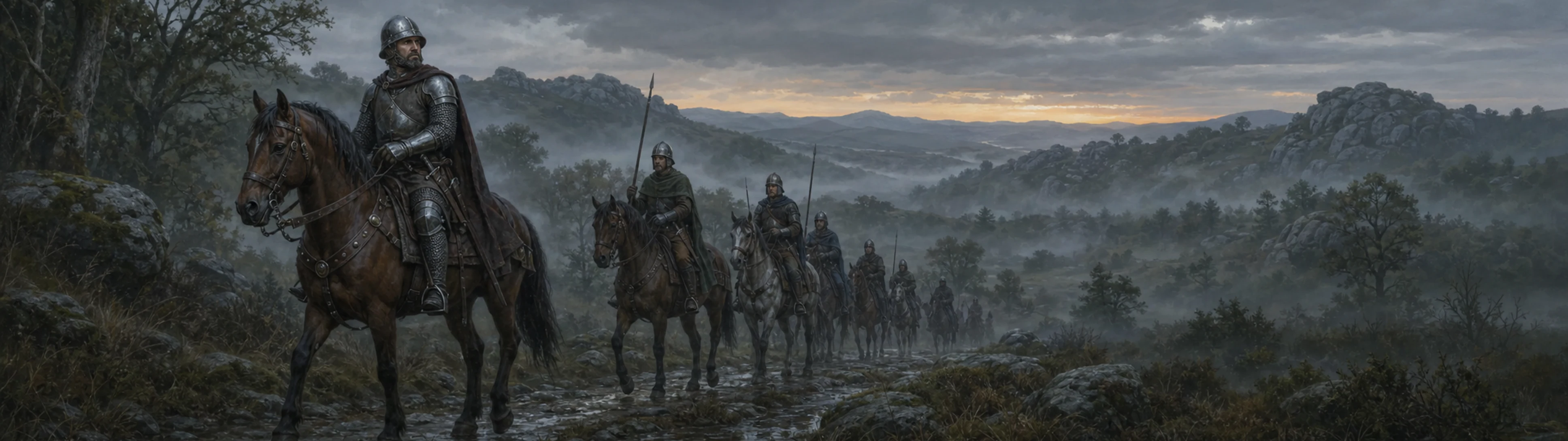
Pedro Álvarez de Soutomaior — remembered as Pedro Madruga — combined ecclesiastical training, dynastic ambition, and a talent for campaigning. Once he succeeded to the house, he pursued its claims with armed retainers and Portuguese support. His career made him lord of Soutomaior and, in different political circumstances, Count of Caminha, Viscount of Tui, and Marshal of Baiona.
The earliest explanation of his nickname is the one recorded by the Galician chronicler Vasco de Aponte: Pedro rose very early when setting out on his *cabalgadas*, or mounted campaigns. The colourful story in which he wins a boundary contest with the Count of Ribadavia by riding at the first cockcrow is a later legend. It belongs to his afterlife in folklore, not to the securely documented origin of the name.
- Pedro Álvarez de Soutomaior, called Pedro Madruga: c. 1430–1486
- Canon of Tui before succeeding to the temporal lordship
- Aponte associated the nickname with Pedro setting out unusually early on military expeditions
- The cockcrow boundary race with Ribadavia is later legend, not established biography
Exile, Return, and a Fortress Rebuilt
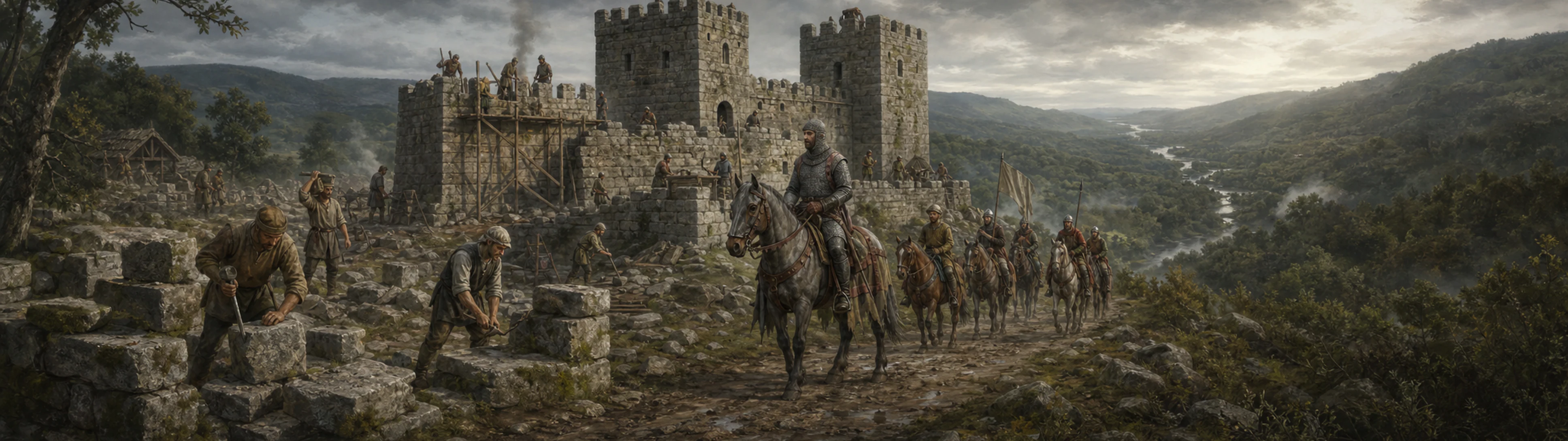
The Great Irmandiño Revolt struck at the physical basis of noble power. In 1467 the castle of Soutomaior was damaged, while Pedro's brother Álvar died fighting the insurgents. Pedro took refuge in Portugal, where he found the alliances and military resources that would shape the rest of his career.
Around 1469–1470 he returned, recovered the lordship, and rebuilt the stronghold as both residence and war machine. The works repaired the destruction and adapted the defences to a world in which firearms mattered increasingly: compact towers, a double enclosure, and openings associated with gunpowder weapons reinforced a castle that would remain the family's operational base.
- 1467: the Irmandiño uprising damaged the castle of Soutomaior
- Álvar died fighting the Irmandiños; Pedro succeeded to the house
- Pedro withdrew to Portugal and returned with support around 1469–1470
- The rebuilt castle incorporated defences suited to late-fifteenth-century warfare
The Beheading of Diego Sarmiento
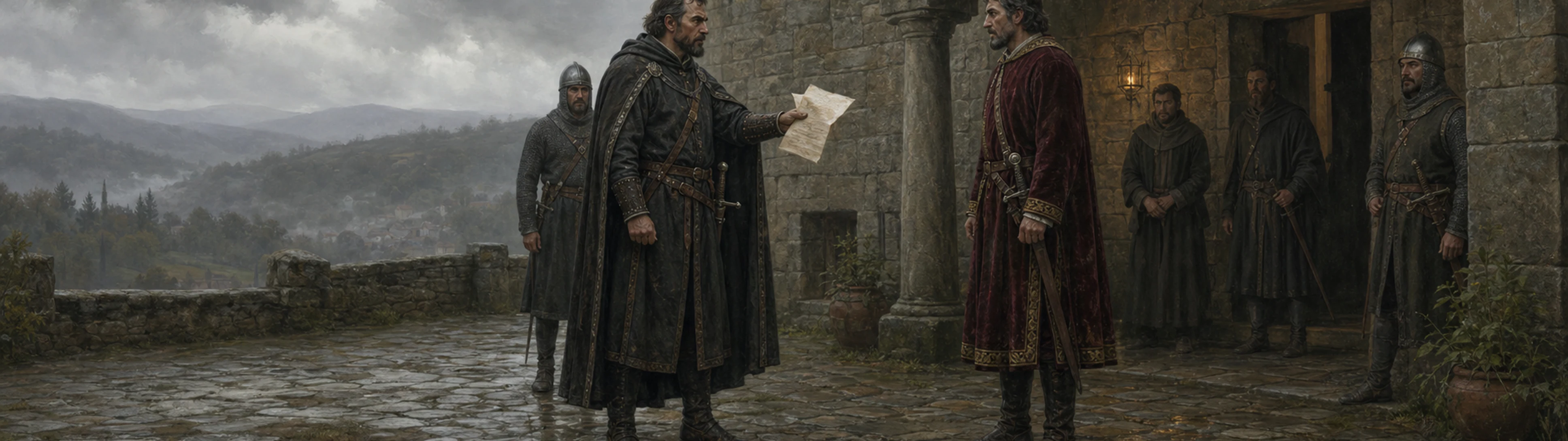
The most brutal intersection of the Soutomaior and Sarmiento stories came at Ribadavia in 1470. The surviving accounts describe a cluster of violence: Teresa de Zúñiga, Countess of Santa Marta, was killed; Pedro carried out a harsh repression; and the abbot of San Clodio was reportedly detained and publicly humiliated. They also agree that Pedro was responsible for the beheading there of his kinsman Diego Sarmiento de Soutomaior, lord of Sobroso. They do not agree on the order of these events.
The execution is well attested; its exact sequence and motive are not. One testimony says that Pedro intercepted letters allegedly revealing a plan by Archbishop Alonso de Fonseca, the Count of Ribadavia, and Diego Sarmiento to kill him, placing Diego's death before the countess's. Other accounts frame the act within reprisals after her death. The surviving evidence therefore supports the killing at Ribadavia, but not a single settled explanation for why Pedro ordered it.
- Victim: Diego Sarmiento de Soutomaior, lord of Sobroso and a kinsman of Pedro
- Place and date: Ribadavia, 1470
- Core fact: Pedro was responsible for Diego's beheading
- Disputed question: the sources differ over the sequence, immediate motive, and role of the alleged intercepted letters
- The abbot of San Clodio was reportedly detained and humiliated during the repression
Juana, Afonso V, and the Portuguese Alliance
When the Castilian crown became contested after the death of Enrique IV, Pedro backed Juana of Castile and her husband and ally Afonso V of Portugal against Isabel. The choice tied the Soutomaior cause to Portugal and placed Pedro at the centre of a wider dynastic war. Afonso rewarded him with the title Count of Caminha; Pedro also held the titles Viscount of Tui and Marshal of Baiona.
Those titles describe the reach of his ambition, but also its vulnerability. Pedro fought bishops, towns, rival Galician houses, and supporters of Isabel while depending on a Portuguese alliance whose fortunes could change beyond Galicia. The conflict around Soutomaior was therefore not an isolated feud: it was a Galician front in the War of the Castilian Succession.
- Pedro supported Juana of Castile and Afonso V of Portugal
- Count of Caminha: a Portuguese title granted by Afonso V
- Other titles: Viscount of Tui and Marshal of Baiona
- His opponents included supporters of Isabel as well as ecclesiastical and noble rivals in Galicia
Capture, Disinheritance, and an Uncertain End
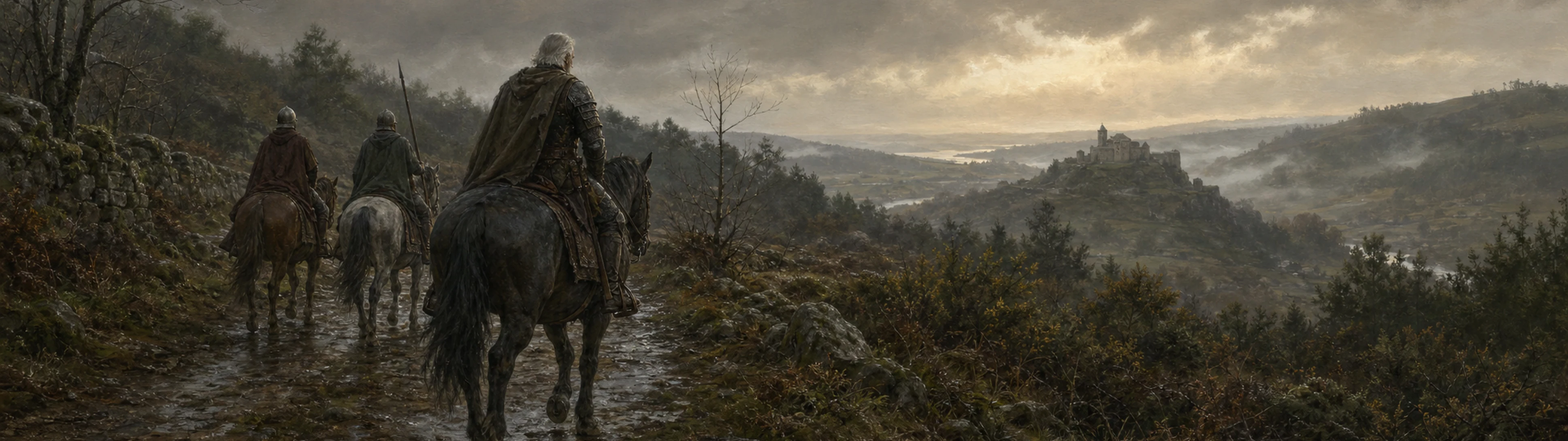
Pedro was captured in 1477, but the arrest did not bring a clean end to the wars. He returned to conflict in the following years as royal pressure and rival alliances narrowed his position. Within the family itself, his son Álvaro eventually took control of the castle, cutting Pedro off from the stronghold from which he had built his power.
The most widely accepted account places Pedro's death in 1486 at the monastery of San Leonardo in Alba de Tormes. The circumstances are uncertain, and the evidence does not justify turning his final journey into a solved mystery. What is clear is the political result: the lord who had rebuilt Soutomaior and dominated the southern wars ended his life away from the castle, while the next generation negotiated with the victorious royal order.
- 1477: Pedro was captured during the struggle against Isabel's supporters
- Conflict resumed after his release
- Pedro's son Álvaro took possession of Soutomaior Castle
- Most accepted account: death in 1486 at San Leonardo, Alba de Tormes
- The precise circumstances of his death remain uncertain
From Family Lawsuits to Public Monument
The house did not end with Pedro. The fortress passed through centuries of family lawsuits and slow decline; by the late eighteenth century it belonged to Benito Fernando Correa, whose arms were set above the main entrance. In the nineteenth century the Marquises of la Vega de Armijo remade the medieval stronghold as a summer residence — half fortress, half neo-Gothic palace — adding the Galería de Damas and laying out the park and gardens that replaced the surrounding fields.
In the early twentieth century the castle passed to the marquis's niece María Vinyals — writer, polyglot, and campaigner for women's rights, remembered as the "Red Marchioness" — who made it a meeting place for artists and intellectuals. The property was auctioned in 1917 and deteriorated for decades until the Diputación de Pontevedra acquired it in 1982 and restored it. The fortress that anchored Pedro Madruga's power is now a public monument, its grounds recognized as an International Camellia Garden of Excellence.
- The fortress is first documented in the twelfth century, in the reign of Alfonso VII
- The Galería de Damas and the gardens date from the nineteenth-century Vega de Armijo rebuilding
- María Vinyals, the "Red Marchioness", made the castle a cultural salon before the 1917 auction
- The Diputación de Pontevedra has owned and restored the castle since 1982
Pedro Madruga and the Columbus Question
No account of the house can ignore its most spectacular modern claim: that Pedro Madruga did not die in 1486 but reappeared as Christopher Columbus. The Galician-origin thesis goes back to Celso García de la Riega around 1900; the researcher Alfonso Philippot later narrowed it to Pedro, pointing to overlapping social circles, resemblances of signature and hand, and the many place names of the Rías Baixas that reappear across the Atlantic. The identification requires Pedro to have staged his own documented death, and mainstream scholarship continues to hold the Genoese origin supported by notarial records.
Genetics has recently entered the argument on both sides. The televised Colón ADN study of 2024 rejected the Galician candidate and favoured a Sephardic family of the western Mediterranean — while drawing criticism for announcing conclusions without publishing data. In 2026 a preprint by forensic geneticists working on the remains of Columbus's descendants reached the opposite conclusion, arguing that kinship patterns point to Pedro Madruga as a common ancestor. Neither claim has yet passed peer review. This page therefore treats the identification as an open modern controversy — part of the house's afterlife, not of its documented record.
- The Galician hypothesis began with Celso García de la Riega; Alfonso Philippot identified Columbus specifically with Pedro Madruga
- The identification requires Pedro to have survived his documented death of 1486; Columbus died at Valladolid in 1506
- The 2024 Colón ADN documentary rejected the Galician theory yet released no data; a 2026 descendant-DNA preprint revived it and awaits peer review
- Mainstream scholarship continues to support the Genoese origin of Columbus
Three Chequered Fesses
The traditional arms of Soutomaior are blazoned: Argent, three fesses chequy Or and Gules in four rows, each charged with a narrow filet Sable. In plain language, three horizontal chequered bands of gold and red cross a silver field, with a thin black band laid across each.
Recorded variants alter the number or arrangement of the bands, so one surviving carving or later armorial may not match another in every detail. The design can be described securely; a symbolic meaning for its colours or chequers cannot. No medieval source cited here assigns them a particular moral, military, or dynastic message.
- Field: silver (*argent*)
- Principal charges: three horizontal fesses chequered gold and red (*Or* and *Gules*) in four rows
- Each chequered fess bears a narrow black filet (*Sable*)
- Variants exist; the blazon should not be turned into invented colour symbolism
Key Figures
The family, rivals, and claimants who shaped Pedro Madruga’s world
Key Dates
“The killing, victim, and place are well supported; the precise sequence and motive remain disputed.”— The surviving accounts of Ribadavia, 1470